
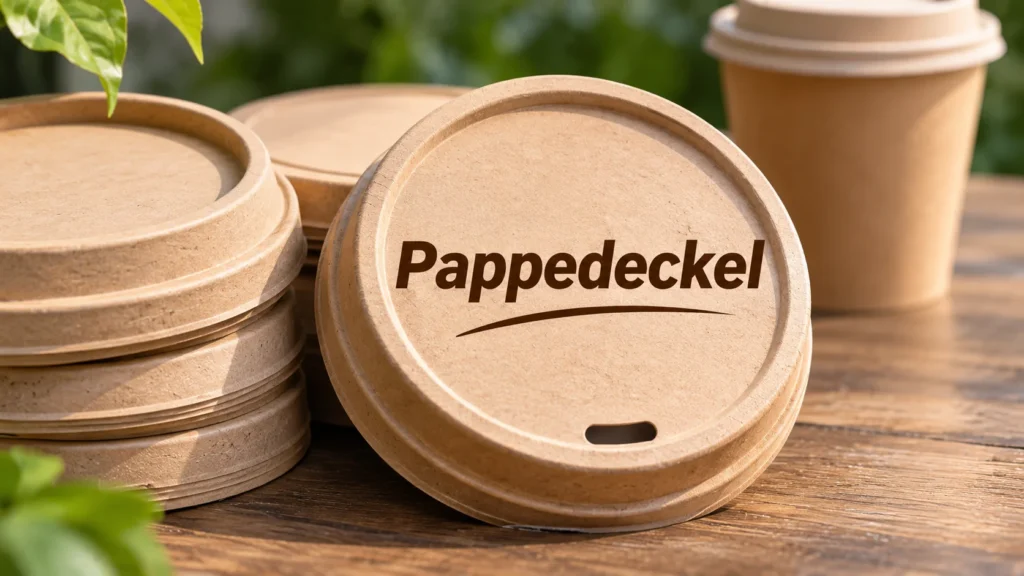
Some words describe things so familiar that we rarely stop to think about them. Pappedeckel belongs to that category. At first glance, it seems to refer to nothing more interesting than cardboard, a material found in packaging, household objects, and countless everyday products. Yet the word carries linguistic details, regional variations, and cultural associations that
Some words describe things so familiar that we rarely stop to think about them. Pappedeckel belongs to that category. At first glance, it seems to refer to nothing more interesting than cardboard, a material found in packaging, household objects, and countless everyday products. Yet the word carries linguistic details, regional variations, and cultural associations that make it more interesting than its simple appearance suggests.
Originating from German-speaking communities, Pappedeckel is associated with cardboard and related objects. Its meaning can shift depending on the region, conversation, and purpose of the material being described. Understanding these differences is useful for anyone encountering the expression in German writing, local speech, product descriptions, or discussions about traditional materials.
A Familiar Object Hiding Behind an Unfamiliar Name
The simplest English interpretation of Pappedeckel is cardboard or a piece of stiff cardboard. The term is connected to the German words Pappe, meaning cardboard, and Deckel, meaning lid or cover.
However, translating the complete expression literally as “cardboard lid” does not always reflect how people use it. In regional German, Pappedeckel may refer to cardboard itself rather than an object specifically designed to cover something.
This distinction matters because everyday language is shaped by habits rather than strict word construction. A word that originally suggests one object can gradually become associated with a broader family of materials.
For example, someone describing an old cardboard box may use a regional expression related to Pappedeckel. Another person discussing a flat piece of packaging might use a similar term. Neither speaker necessarily means a separate lid.
The surrounding situation provides the most reliable clue to the intended meaning.
How Geography Changes the Sound of Cardboard
German is not spoken identically throughout every German-speaking region. Local dialects preserve vocabulary that may sound unusual to people familiar only with standard German.
Pappedeckel appears in regional usage, particularly within the broader Alemannic language area. Related expressions include Pabbedeggel and Babbedeckel, illustrating how pronunciation and spelling can change between communities.
More established standard German forms include Pappdeckel and Pappendeckel. These forms are closely associated with cardboard, cardboard pieces, and related materials.
The differences are not merely spelling mistakes. Regional expressions frequently develop through generations of spoken communication, with local pronunciations eventually appearing in written form.
For someone learning German, recognizing this variation can prevent unnecessary confusion. A familiar object might have several names without becoming a different product.
The Moment a Piece of Cardboard Becomes Useful
Cardboard has an unusual ability to disappear into everyday life. It surrounds products, protects surfaces, supports printed materials, and helps organize objects, often without attracting much attention.
A stiff cardboard piece can separate fragile items inside a package, reinforce a lightweight container, or provide a temporary protective surface during household work. Depending on its thickness and construction, it can also become part of a folder, display board, or handmade object.
This flexibility explains why a general cardboard-related word can appear in so many different conversations. The material is not confined to one industry or purpose.
In packaging, cardboard is valued for its relatively low weight, adaptability, and printability. In homes, it is convenient because it can often be cut, folded, and reused without specialized equipment.
Its usefulness lies less in sophistication and more in how easily it can be adapted to ordinary requirements.
A Curious Connection to German Drinking Culture
One of the more recognizable cardboard objects in German-speaking countries is the beer coaster, commonly called a Bierdeckel.
Traditionally placed underneath a drinking glass, a Bierdeckel helps absorb condensation and protect the table beneath it. Some designs also serve as printed advertisements or keepsakes associated with particular establishments.
The relationship between Bierdeckel and Pappedeckel is primarily connected to the material. Both expressions involve cardboard-related ideas, but they should not be treated as exact synonyms.
Bierdeckel is the more accurate standard German word when specifically referring to a beer coaster.
Interestingly, coasters also developed social functions beyond protecting furniture. In some traditional hospitality settings, marks on a coaster could help record drinks ordered during a visit.
A small, inexpensive cardboard object could therefore become part of an establishment’s everyday record-keeping.
Not Every Cardboard Surface Is Made the Same Way
The word Pappedeckel describes a material-related concept rather than a single technical specification. Actual cardboard products vary considerably in structure and performance.
Some are made from compact paperboard with a relatively smooth surface. Others use thicker fiber-based materials or layered constructions designed to improve rigidity.
These differences influence how a cardboard component behaves during use. A thin sheet may bend easily, while a thicker board can provide greater resistance to deformation. Certain paperboard products are intended for printing and presentation, whereas others prioritize protective packaging.
Environmental conditions also matter. Ordinary untreated cardboard can absorb moisture, weaken, or lose its shape when exposed to water.
That is why selecting a cardboard component requires attention to its intended purpose rather than relying on appearance alone.
Why the Humble Material Still Earns Its Place
Despite advances in synthetic materials, cardboard remains useful because it combines several practical qualities.
Its advantages include:
- Low weight, making many packaging applications easier to handle.
- Easy cutting, folding, printing, and shaping.
- Broad availability in different thicknesses and formats.
- Potential for reuse when the material remains clean and structurally sound.
- Recyclability in suitable collection and processing systems.
These advantages do not mean every cardboard product performs equally well. A box designed for shipping may need different properties from a decorative cover or lightweight insert.
Choosing the right type involves balancing strength, cost, appearance, expected lifespan, and exposure to moisture.
The Environmental Question Is More Complicated Than It Looks
Cardboard is often associated with environmentally responsible packaging because its fibers come from renewable resources and many paper-based products can enter recycling systems.
However, sustainability cannot be judged from the material name alone.
The environmental impact of a cardboard product depends on factors such as fiber sourcing, manufacturing processes, transportation, coatings, reuse, and disposal.
A clean, uncoated cardboard sheet is generally easier to handle through conventional paper recycling than a heavily contaminated or composite material. Plastic laminations, certain coatings, and food contamination can complicate recovery.
Reusing suitable cardboard before disposal may also extend its practical life.
Consumers should therefore check local recycling requirements rather than assuming that every product containing cardboard belongs in the same recycling bin.
An Unexpected Meaning That Has Nothing to Do With Packaging
Regional vocabulary sometimes develops surprising associations. In parts of southwestern Germany, expressions related to Babbedeckel can also be used informally to refer to a driver’s license.
This meaning is quite different from the familiar cardboard interpretation.
It reflects how physical objects and documents can influence colloquial language. A card or paper document may acquire a nickname based on its appearance or material, even when the official name is something else.
Such expressions are usually limited by region and social context. Someone using standard German would normally say Führerschein when referring to a driver’s license.
For translators, this provides an important reminder: interpreting regional speech requires understanding the complete sentence rather than translating each word independently.
When One German Word Leads to Several English Translations
Pappedeckel can be difficult to translate accurately without knowing what the speaker is describing.
In a discussion about packaging materials, “cardboard” may be the natural choice. When referring to a particular flat object, “piece of cardboard” could be clearer. If a physical cover is involved, “cardboard cover” or “cardboard lid” might fit.
The following distinctions are especially useful:
- Pappedeckel: A regional cardboard-related expression whose precise meaning depends on context.
- Pappdeckel: An established German term associated with cardboard or cardboard covers.
- Pappendeckel: A related German form referring to cardboard or a piece of stiff cardboard.
- Bierdeckel: The standard term for a beer coaster.
Understanding these differences helps avoid overly literal translations, especially when reading regional writing or older descriptions.
Before Throwing It Away, Consider Another Purpose
A clean piece of cardboard often has useful life remaining after its original purpose ends.
Thicker sections can serve as temporary protective layers when working on furniture or delicate surfaces. Smaller pieces can become drawer dividers, templates, or supports for craft projects.
Cardboard can also help organize lightweight household items, protect stored objects from scratches, or provide a backing surface for photographs and handmade displays.
These applications are simple, but they illustrate why cardboard remains practical.
Care is necessary when reusing pieces that have been exposed to chemicals, food residue, mold, or excessive moisture. Such material may be unsuitable for further household use.
The best reuse opportunities generally involve clean, dry cardboard that has retained its original strength.
The Last Detail That Makes Pappedeckel Worth Remembering
Pappedeckel demonstrates how an ordinary material can carry more meaning than its physical appearance suggests.
Behind the word lies a mixture of regional German vocabulary, familiar cardboard applications, and unexpected cultural associations. Its interpretation changes according to context, making it a useful example of how language develops around everyday objects.
The next time the term appears in a conversation, product description, or regional German text, there is no need to assume it refers to one particular type of lid. It may describe cardboard itself, a specific piece of material, or something entirely different in local speech.
That flexibility is what makes Pappedeckel an interesting word: a familiar object, several possible meanings, and a small glimpse into the way language connects with daily life.
More Stories;
Xnañga: The Strange Search Term With an Unexpected Internet Connection















Leave a Comment
Your email address will not be published. Required fields are marked with *