
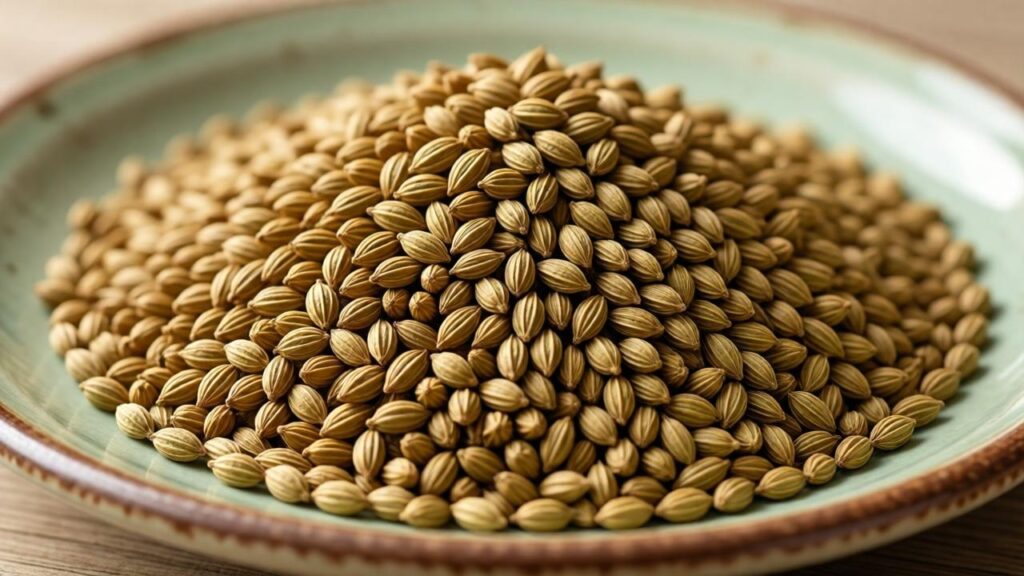
A spice does not need to be large to leave a strong impression. A small handful of coriander seeds can fill a warm pan with a citrusy aroma, give a curry more depth, or turn an ordinary vegetable dish into something noticeably more fragrant. Their appearance is modest—round, dry, and usually tan or light brown—but
A spice does not need to be large to leave a strong impression. A small handful of coriander seeds can fill a warm pan with a citrusy aroma, give a curry more depth, or turn an ordinary vegetable dish into something noticeably more fragrant. Their appearance is modest—round, dry, and usually tan or light brown—but their behavior in the kitchen is remarkably versatile.
Coriander seeds are the dried fruits of the coriander plant, Coriandrum sativum. The same plant gives us the fresh green herb commonly called cilantro. Once the mature fruits are dried, however, they become a very different culinary ingredient. Instead of the fresh, green character associated with cilantro leaves, coriander seeds offer warm, lightly sweet, citrus-like, earthy, and aromatic notes.
That difference is one of the reasons the spice deserves attention on its own.
Whole coriander seeds can be toasted, crushed, infused in oil, added to pickling mixtures, or ground into coriander powder. Their flavor can become more pronounced through gentle heat, while freshly ground coriander often has a livelier aroma than powder that has been sitting in a cupboard for months.
For cooks, the real appeal is control. You can decide whether the seeds remain whole, become roughly crushed, or are transformed into a fine powder. You can use them at the beginning of cooking to build a foundation or toward the end when you want their fragrance to remain more noticeable.
| Fact | Details |
|---|---|
| Common Name | Coriander seeds |
| Scientific Name | Coriandrum sativum |
| Plant Family | Apiaceae |
| Plant Origin | Broadly associated with regions around the Mediterranean and southwestern Asia |
| Main Growing Regions | India, China, Morocco, parts of Europe, North Africa, and other warm or temperate regions |
| Common Culinary Use | Curries, spice blends, pickles, marinades, breads, vegetables, soups, sauces, and meat dishes |
| Flavor Profile | Citrusy, warm, lightly sweet, earthy, woody, and aromatic |
| Common Forms | Whole seeds, crushed seeds, ground coriander, and coriander powder |
| Main Plant Part Used | Mature dried fruits commonly called seeds |
| Related Ingredient | Cilantro, the fresh leaves of the same plant |
| Typical Color | Tan, beige, pale brown, or golden-brown |
| Common Food Pairings | Cumin, chili, garlic, ginger, lemon, onion, legumes, vegetables, poultry, lamb, and fish |
Start With the Whole Spice
Pick up a few whole coriander seeds and the first thing you notice is their shape. They are small and rounded, with fine ridges running across their surface. Their dry exterior does not immediately suggest how aromatic they can become.
Crush one between your fingers and the character changes.
The fragrance becomes easier to recognize: citrus peel, warm spice, subtle sweetness, and a faint earthy quality. The aroma is not as sharp as black pepper and does not have the intense heat of chili. Coriander works in a gentler register, adding fragrance and dimension rather than dominating a dish.
This makes it particularly useful in combinations.
Cumin can provide a deeper, earthier note. Chili contributes heat. Garlic brings pungency. Ginger adds warmth and freshness. Coriander can sit between these flavors and help connect them.
That is one reason coriander spice appears so frequently in blends rather than being used alone.
Seeds, fruits, and everyday terminology
Technically, the structures cooks call coriander seeds are dried fruits. In everyday culinary language, however, “coriander seeds” is the normal term and is perfectly practical.
The plant itself is an annual herb with delicate leaves and small flowers. After flowering, it produces the round fruits that eventually dry and become the spice sold whole or ground.
This botanical detail becomes useful when trying to understand the relationship between cilantro and coriander.
The leaves and seeds come from the same plant, but they are treated as separate ingredients because their flavors are dramatically different.
Fresh cilantro is green, herbal, and fresh. Coriander seed is warm, aromatic, citrus-like, and slightly sweet.
The distinction is particularly important when reading recipes. A recipe asking for cilantro is not asking for coriander powder, and a recipe calling for coriander seeds cannot normally be substituted with a handful of fresh leaves.
From the Garden to the Spice Jar
The coriander plant begins life as a small herb, but its culinary journey can end in several different forms.
When grown for seed, the plant is allowed to flower and produce mature fruits. The fruits change as they ripen, becoming suitable for harvesting and drying.
Once dried, they become firm enough to store as whole coriander seeds.
At this stage, the spice has a much longer practical life than fresh plant material, provided it is kept away from moisture, excessive heat, light, and air.
Processing can continue after drying.
Some seeds are sold whole for cooks who prefer to grind them as needed. Others are crushed or processed into ground coriander. Commercial coriander powder is convenient because it can go directly into a recipe, but it also has a larger exposed surface area than whole seeds.
That difference matters.
A whole seed protects much of its aroma inside its structure. Grinding exposes the interior to air, allowing its fragrance to emerge immediately but also making it more vulnerable to gradual loss of aroma during storage.
Why whole coriander seeds are worth keeping
There is a reason many spice-conscious kitchens keep whole seeds even when ground coriander is readily available.
Whole seeds provide options.
Suppose you are preparing a curry. You might toast a spoonful, grind it, and add it with other spices.
For a pickle, you might leave the seeds whole.
For roasted vegetables, you could crush them roughly.
For a marinade, you might grind them into a fine powder.
The same ingredient can therefore behave in several ways depending on how it is prepared.
That flexibility is especially useful when building a home spice collection.
The Flavor Story: Citrus Without Being Sour
Coriander flavor can be difficult to describe with one word.
It is often described as citrus-like, but coriander seeds do not taste like lemon juice or orange juice. Their citrus character is aromatic rather than sharply acidic.
There is warmth underneath it.
There can also be a mild sweetness, an earthy background, and a slightly woody quality.
The overall impression is fragrant rather than aggressive.
This is why coriander pairs so naturally with foods that already have strong flavors. It can soften the transition between hot chili and earthy cumin, or bring brightness to a rich meat dish without adding actual acidity.
Heat changes this profile again.
Raw coriander seeds
Raw seeds tend to have a more restrained aroma. They still carry the characteristic citrus and warm-spice notes, but the fragrance can be less open.
This form works well when the seeds will have plenty of time to cook with other ingredients.
Toasted coriander seeds
Gentle dry heat releases more aroma and develops a deeper, warmer character.
The citrus notes become more noticeable, while the overall spice takes on a slightly nutty and roasted quality.
Toasting is particularly useful before grinding.
Ground coriander
Once ground, coriander becomes easier to distribute throughout a dish.
It works especially well in curries, spice rubs, soups, sauces, marinades, and doughs.
The trade-off is that ground spice generally loses its freshest aroma faster than intact seeds.
| Form | Flavor Character | Best Use |
|---|---|---|
| Raw whole seeds | Subtle, aromatic, gently citrusy | Pickles, tempering, slow-cooked dishes |
| Toasted whole seeds | Warmer, fuller, more fragrant | Spice blends and freshly ground mixes |
| Ground coriander | Evenly distributed and aromatic | Curries, sauces, marinades, soups, breads |
Coriander Seeds Across the Kitchen
The history of coriander as a culinary ingredient stretches across numerous food traditions. It is especially prominent in South Asian cooking, but its usefulness extends much further.
The spice works because it has enough character to be recognizable while remaining compatible with a wide range of ingredients.
South Asian cooking
Coriander seeds are fundamental to many South Asian spice preparations.
They can be combined with cumin, dried chili, black pepper, cardamom, cloves, cinnamon, turmeric, or other spices depending on the dish and regional tradition.
A cook might toast coriander seeds with cumin before grinding them into a homemade spice mixture. The resulting blend can then become part of a curry base, lentil dish, vegetable preparation, or meat marinade.
Whole seeds also appear in pickles and tempering preparations.
When added to hot oil or ghee, they release aroma into the fat. That infused fat can then carry the flavor into onions, garlic, vegetables, lentils, or sauces.
For readers who enjoy exploring different food traditions, dishes built around coriander provide an easy way to notice how the same spice can behave differently across regional cooking styles.
Middle Eastern and Mediterranean influences
Coriander seeds also work naturally with foods common in Middle Eastern and Mediterranean cooking.
Their warm citrus quality complements chickpeas, lentils, roasted vegetables, grilled meats, garlic, lemon, parsley, and olive oil.
A simple spice mixture containing coriander and cumin can give roasted vegetables more depth without requiring a complicated sauce.
Coriander can also be paired with lamb and other strongly flavored meats because its aromatic character adds brightness while remaining warm enough for rich dishes.
European preparations
Coriander seeds have also found a place in European culinary traditions.
They can appear in breads, sausages, preserved foods, spice mixtures, and certain beverages.
The flavor is especially useful where a recipe needs a warm aromatic note rather than straightforward heat.
This illustrates an important characteristic of coriander: it is not tied to one particular cooking style. The same seeds can move from a spicy curry to a loaf of bread or a pickling mixture without seeming out of place.
Whole Coriander Seeds or Coriander Powder?
The choice often comes down to what you want the spice to do.
Whole coriander seeds are slower and more flexible. They can be toasted, crushed, or left intact. Ground coriander is quicker and easier because it is ready to measure and mix.
If you cook frequently with spices, keeping both forms can be useful.
Whole seeds are especially valuable when freshness matters. You can grind a small quantity immediately before cooking, which produces a stronger aroma than old powder.
Ground coriander is convenient for everyday recipes where speed matters or where a smooth texture is preferred.
There is also a difference in how the two forms spread through food.
A whole seed remains a small individual ingredient. Ground coriander becomes part of the entire mixture.
That makes powder better for sauces, marinades, spice rubs, and doughs, while whole seeds can provide occasional bursts of flavor.
Toasting Coriander Without Burning It
Toasting is one of the simplest ways to make coriander seeds more aromatic.
You do not need oil.
Start with a clean, dry pan and use moderate heat. Add the seeds in a single layer so they can warm relatively evenly.
Stay near the pan.
Coriander seeds can move from pleasantly toasted to scorched more quickly than a distracted cook might expect.
As they heat, gently shake the pan or stir the seeds. You are looking for fragrance rather than a dramatic change in color.
When the aroma becomes noticeably stronger and warmer, remove the seeds from the heat.
Spread them on a cool plate or bowl and allow them to cool before grinding.
The cooling stage is useful because freshly heated seeds can continue releasing heat after they leave the pan.
Lightly toasted is not the same as burned
A good toast brings out fragrance.
Burning destroys it.
Lightly toasted coriander should smell warm, aromatic, and inviting. Burned coriander tends to smell harsh, bitter, smoky, or unpleasant.
If the seeds become very dark and give off an acrid smell, they have probably gone too far.
There is no benefit in pushing them until they are deeply browned.
The goal is to wake up the spice, not cook it like a roasted nut.
Practical Ways to Cook With Coriander Seeds
Once you have whole coriander seeds in the kitchen, there are many ways to use them without making every dish taste like curry.
Build a homemade spice blend
Toast coriander with cumin and perhaps dried chili, then grind the mixture.
The coriander provides aromatic citrus notes, cumin supplies earthy depth, and chili adds heat.
The proportions can be adjusted according to the dish.
Add them to roasted vegetables
Crushed coriander seeds work beautifully with potatoes, carrots, cauliflower, pumpkin, and other vegetables that respond well to roasting.
Combine them with garlic, olive oil, salt, and a little chili for a simple seasoning.
The coriander adds fragrance without covering up the vegetable’s natural flavor.
Use them with lentils and beans
Legumes can sometimes benefit from spices that add aroma without excessive heat.
Coriander works well with lentils, chickpeas, beans, onion, garlic, and ginger.
Ground coriander can be stirred into a cooking mixture, while whole seeds can be toasted in oil as part of the finishing process.
Give pickles more character
Whole coriander seeds are particularly useful in pickling.
Their firm texture allows them to remain recognizable while slowly contributing flavor to the surrounding liquid.
They also pair naturally with mustard seed, chili, garlic, vinegar, and other pickling spices.
Try them in marinades
Ground coriander works well in marinades because it distributes evenly.
Combine it with garlic, ginger, lemon, oil, chili, and salt for a versatile mixture suitable for vegetables, poultry, fish, or meat.
The citrus-like character of coriander complements actual citrus particularly well.
Add a little to bread
Coriander seeds can be used in bread and savory baked goods.
Whole seeds provide texture and occasional aromatic bursts, while ground coriander blends more subtly into the dough.
It is particularly interesting alongside ingredients such as garlic, onion, rye, wheat, or other warm spices.
Experiment with sauces
A small amount of ground coriander can add complexity to tomato-based sauces, yogurt-based mixtures, chutneys, and other savory preparations.
The trick is restraint.
Coriander does not need to be the loudest flavor to be useful.
Simple Flavor Partnerships That Rarely Feel Random
One of the easiest ways to understand coriander seeds is to think in pairs.
Coriander + cumin: earthy, warm, and balanced.
Coriander + chili: aromatic warmth alongside heat.
Coriander + garlic: fragrant and savory.
Coriander + ginger: warm, fresh, and lively.
Coriander + lemon: citrus notes become brighter.
Coriander + roasted vegetables: earthy sweetness with aromatic lift.
Coriander + legumes: warmth that complements beans and lentils.
These combinations are not rigid formulas. They are starting points.
A cook can adjust them depending on the ingredients already present in the dish.
For a mild vegetable preparation, coriander may need only a small amount of chili.
For a rich meat dish, more coriander and cumin may provide the depth required.
For a fresh marinade, lemon and ginger can push the brighter side of the spice forward.
What Coriander Seeds Contribute Nutritionally
Spices are often discussed in terms of health because they contain naturally occurring nutrients and plant compounds. Coriander seeds are no exception.
They contain small amounts of nutrients and naturally occurring aromatic compounds. They also contain dietary fiber and various minerals in their whole form.
But serving size matters.
People generally use coriander seeds in teaspoons or tablespoons rather than eating large bowls of them. That means the nutritional contribution of a normal culinary serving should be kept in perspective.
Coriander seeds can contribute flavor while being part of an overall varied diet, but they should not be treated as a substitute for vegetables, fruits, legumes, grains, protein sources, or other nutritionally significant foods.
The same principle applies to discussions of coriander seeds benefits.
A spice can be valuable without needing to be described as a miracle ingredient.
Traditional uses versus medical claims
Coriander has a long history in traditional food and wellness practices.
Various cultures have used coriander preparations in customary ways, including beverages and digestive preparations.
Modern research has also examined compounds found in coriander, but research interest does not automatically mean that a particular health effect has been proven in humans.
That distinction is important.
It is reasonable to say that coriander seeds have been traditionally valued for certain purposes or that researchers have investigated their chemical compounds.
It is not responsible to present the spice as a treatment for a disease simply because a laboratory study or traditional practice exists.
The best place for coriander seeds in everyday life remains the kitchen.
Buying Better Coriander Seeds
You do not need specialized equipment to judge coriander seeds.
Your nose is one of the most useful tools.
Open the package and smell it.
Fresh coriander seeds should have a recognizable aromatic character. If the spice smells almost like nothing, it may have lost much of its fragrance.
Look at the seeds as well.
They should be dry and reasonably clean, without obvious signs of moisture, mold, insects, or contamination.
The exact shade can vary, so color alone is not a reliable measure of quality.
Packaging also matters.
A tightly sealed package protects the seeds better than an open container sitting exposed to air.
If you buy from a bulk spice shop, choose stock that appears dry and fragrant rather than simply selecting the cheapest option.
Whole coriander seeds are often particularly practical for home cooks because you can assess their aroma and condition directly and grind small amounts when required.
How to Store Coriander Seeds
The enemies of dried spices are surprisingly ordinary: moisture, heat, light, and air.
A kitchen cupboard can therefore be a better storage location than the shelf directly above a stove.
Heat exposure can gradually affect the aromatic quality of spices. Steam from cooking can introduce moisture. Strong light can also contribute to quality loss over time.
Keep whole coriander seeds in an airtight container.
A small glass jar with a secure lid works well.
Labeling the jar with the purchase date can also help you keep track of older spices.
Ground coriander deserves even more attention because its greater surface area makes it easier for aroma to dissipate.
This is one reason how to store coriander seeds and how to store coriander powder are slightly different practical concerns.
Both should be protected from the same environmental factors, but whole seeds generally retain their character better than already-ground spice.
Kitchen Mistakes That Quietly Ruin Good Coriander
Coriander seeds are forgiving, but a few mistakes can reduce their impact.
Using seeds that have lost their aroma
A spice can remain visually recognizable long after its flavor has faded.
If old coriander seeds barely smell when crushed, adding more and more may not solve the problem.
Freshness is more useful than quantity.
Burning the seeds
High heat is unnecessary.
If coriander becomes bitter and smoky during toasting, the pan was probably too hot or the seeds stayed in it too long.
Gentle heat gives you more control.
Grinding a huge batch
Grinding everything at once seems convenient, but it can leave you with a large container of increasingly flat-smelling powder.
Small batches are generally more rewarding.
Keeping spices beside the stove
The convenience is tempting.
The heat is not.
A cupboard away from direct heat is usually a better home for coriander and other dried spices.
Adding too much
Coriander has a relatively friendly flavor, which can encourage generous scooping.
But a spice blend works best when individual ingredients have room to interact.
If coriander overwhelms the dish, the other flavors may disappear underneath its aroma.
An Illustrative Kitchen Experiment
Imagine making a simple roasted cauliflower dish.
You have three options on the counter: whole coriander seeds, lightly toasted seeds, and coriander powder.
Start with the whole seeds.
If you scatter them over the cauliflower without crushing them, you will encounter their flavor in small individual bursts. Some bites will contain a noticeable seed; others will not.
Now lightly toast another portion and crush it.
The aroma becomes warmer and more pronounced. Mixed with oil, garlic, salt, and chili, it creates a seasoning that clings to the vegetable.
Finally, try coriander powder.
Instead of isolated bursts, the flavor becomes more evenly distributed. The cauliflower takes on a subtle coriander character throughout.
All three approaches use the same spice.
Yet the experience is different.
That is the practical lesson behind whole coriander seeds: preparation is part of the ingredient.
Can Coriander Seeds Be Used in Drinks?
They can be.
Coriander seeds have traditionally appeared in various infused preparations, including warm beverages made by steeping spices in water.
Their naturally aromatic character makes them suitable for combinations with ingredients such as ginger, fennel, cardamom, or citrus peel.
For a simple kitchen infusion, lightly crushed coriander seeds can be steeped in hot water and then strained.
The result is quite different from a sweet commercial drink. It is primarily an aromatic spice infusion.
As with other traditional wellness beverages, it is better to view such preparations as food or customary drinks rather than assuming they have guaranteed medicinal effects.
The Difference Between Cilantro Seeds and Coriander Seeds
This question can be confusing because cilantro seeds and coriander seeds come from the same plant.
In common culinary terminology, coriander seeds are the mature dried fruits of Coriandrum sativum.
“Cilantro seeds” is sometimes used informally because cilantro refers to the plant’s fresh leaves and stems in many English-speaking contexts.
The important point is not the label but the botanical identity.
If a package says coriander seeds, you are dealing with the seed spice used in cooking.
The leaves are a different part of the same plant and have a very different flavor.
That is why a recipe calling for cilantro and one calling for coriander seeds should be approached as two separate ingredient instructions.
Coriander Powder Is Not Just a Shortcut
Ground coriander sometimes gets treated as the less interesting version of the whole spice.
That is unfair.
Powder is incredibly useful.
A smooth spice mixture is often impossible to achieve with whole seeds alone. Ground coriander disperses through sauces, soups, doughs, marinades, and spice rubs.
The important question is freshness.
A recently ground batch can smell remarkably lively. An old container can seem muted.
If you have whole seeds and a small spice grinder, making coriander powder at home becomes an easy way to control freshness.
Toast first when the recipe calls for deeper roasted notes.
Grind without toasting when you want a brighter raw-seed character.
The choice gives you another layer of control.
Why Coriander Seeds Belong in a Well-Used Kitchen
The best kitchen ingredients are rarely the ones with only one purpose.
Coriander seeds can contribute aroma at the beginning of cooking, texture when left whole, roasted depth when toasted, and even distribution when ground.
They work with vegetables and meats.
They can appear in curries and breads.
They fit comfortably into pickles, marinades, soups, sauces, and spice blends.
They also combine easily with ingredients already common in home kitchens.
That versatility explains their longevity.
The spice does not depend on one fashionable recipe or one particular cuisine. It works because its flavor occupies a useful middle ground: bright enough to lift a dish, warm enough to add depth, and mild enough to cooperate with other spices.
Frequently Asked Questions About Coriander Seeds
Are coriander seeds and cilantro seeds actually the same thing?
They come from the same plant, Coriandrum sativum. “Coriander seeds” is the established culinary term for the mature dried fruits used as a spice. “Cilantro seeds” may be used informally because cilantro refers to another culinary use of the same plant, but coriander seeds are the standard name for the spice.
Can whole coriander seeds be eaten without grinding?
Yes. Whole coriander seeds can be eaten as part of dishes, particularly pickles, spice mixtures, and preparations where their texture is welcome. They are firm and aromatic, so whether you want them whole depends on the recipe and your preferred texture.
Should I toast coriander seeds before grinding them?
Toasting is optional. It produces a warmer, more developed aroma and can add roasted depth to a spice blend. If you want the fresher, brighter character of the raw spice, you can grind the seeds without toasting them.
What does coriander seed taste like?
Coriander has a distinctive citrus-like aroma combined with warm, lightly sweet, earthy, and sometimes woody notes. It is aromatic rather than hot. Toasting makes the flavor deeper and warmer, while freshly ground coriander tends to smell particularly lively.
Is coriander powder the same as ground coriander?
Yes. “Ground coriander” and “coriander powder” generally refer to coriander seeds that have been ground into a powder. The terms can vary by region and packaging, but they normally describe the same basic spice form.
How long do coriander seeds stay fresh?
Whole coriander seeds can remain usable for a considerable period when stored properly, but freshness is better judged by aroma and flavor than by an arbitrary date. Over time, the seeds gradually lose their fragrance. If crushing them produces very little aroma, they may be past their best.
What is the best way to store whole coriander seeds?
Keep them in a tightly sealed container in a cool, dry, dark cupboard. Avoid storing them directly beside a stove, oven, kettle, or other source of heat and steam. Protecting the seeds from moisture and air helps preserve their aroma.
Can coriander seeds be used in pickles?
Yes. Whole coriander seeds are well suited to pickling because they retain their shape while contributing their warm, citrus-like aroma to the surrounding mixture. They pair particularly well with ingredients such as mustard seed, chili, garlic, vinegar, and other pickling spices.
What spices pair best with coriander?
Cumin is one of the most natural partners, especially in savory spice blends. Coriander also works well with chili, garlic, ginger, black pepper, turmeric, cardamom, and cinnamon. Lemon and other citrus ingredients can emphasize its naturally bright aromatic side.
Can coriander seeds be used in bread?
Yes. Whole or lightly crushed seeds can be incorporated into savory breads and baked goods. They provide small bursts of aroma and texture. Ground coriander can also be mixed into dough when a more evenly distributed flavor is preferred.
Is freshly ground coriander better than packaged powder?
Freshly ground coriander often has a stronger and more noticeable aroma because the seeds have been protected in whole form until shortly before use. Packaged powder is still convenient and useful, particularly when it is fresh and stored properly.
Can coriander seeds be used to make an infused drink?
Yes. Lightly crushed seeds can be steeped in hot water and strained to make a simple aromatic infusion. Coriander can also be combined with other culinary spices such as ginger or fennel. Such drinks should be viewed primarily as traditional or culinary preparations rather than guaranteed medical treatments.
A Small Spice With a Surprisingly Large Range
Coriander seeds demonstrate how much can be hidden inside an ingredient that looks almost insignificant.
They begin as part of a delicate herb but eventually become a dry spice with an entirely different character. They can remain whole, become lightly crushed, or turn into coriander powder. They can be toasted for greater warmth or used raw when a fresher aromatic quality is preferred.
Their usefulness also comes from their ability to cooperate.
Coriander does not need to dominate a dish. It can sit beside cumin, chili, garlic, ginger, lemon, vegetables, legumes, meat, and other spices while giving the overall flavor a more complete shape.
For anyone learning how to use coriander seeds, the simplest approach is to experiment with preparation rather than simply increasing quantity. Smell the seeds before and after toasting. Grind a small batch and compare it with older powder. Try whole seeds in a pickle and ground coriander in a marinade. Notice how the same spice changes depending on what happens before it reaches the plate.
That is where coriander becomes more than another jar in the spice cupboard. Its real strength is not complexity for its own sake, but adaptability. A few seeds can bring warmth to a lentil dish, brightness to roasted vegetables, depth to a spice blend, or fragrance to freshly baked bread.
And once you learn to recognize that aroma, the small round seeds become much easier to appreciate for what they really are: one of the kitchen’s most flexible traditional spices.
For More Visits: Worldmagazine
















Leave a Comment
Your email address will not be published. Required fields are marked with *