
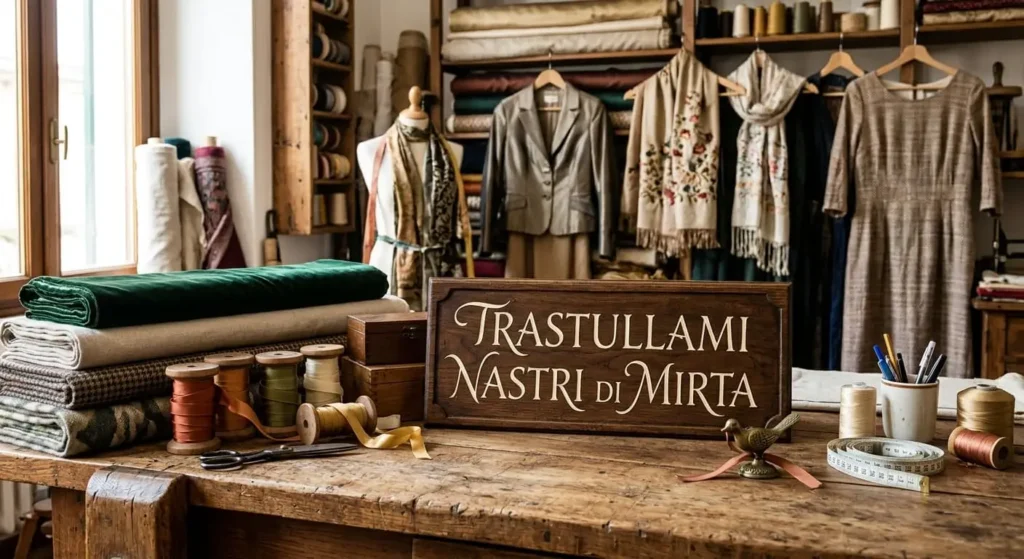
The phrase “trastullami nastri di mirta” presents an interesting combination of Italian wording and a name associated with decorative ribbons. While it does not immediately identify a widely recognized public personality, it offers a connection to a specialist creative-materials identity that deserves a closer look. Understanding the phrase requires examining its linguistic components, the identity
The phrase “trastullami nastri di mirta” presents an interesting combination of Italian wording and a name associated with decorative ribbons. While it does not immediately identify a widely recognized public personality, it offers a connection to a specialist creative-materials identity that deserves a closer look. Understanding the phrase requires examining its linguistic components, the identity of I Nastri di Mirta, and the wider role of decorative ribbons in fashion, textiles, handmade crafts, and everyday presentation.
I Nastri di Mirta is associated with decorative ribbon products and textile embellishments. The name appears in connection with Rodomonte Scali, while its product identity includes different ribbon styles and collections. This creates an opportunity to understand the subject through its commercial identity, the materials associated with it, and the creative applications that make decorative ribbons relevant to different audiences.
Rather than treating every unfamiliar name as a celebrity or assuming that a search phrase represents an individual biography, it is important to consider its actual context. The combination of words in this keyword may reflect a brand-related search, an Italian expression, or a particular product reference. Exploring these possibilities provides a clearer picture of what the phrase represents and why someone might be interested in finding more information about it.
Quick Bio Table
| Fact | Details |
|---|---|
| Full Name | I Nastri di Mirta |
| Date of Birth | Not applicable to the brand; not publicly established |
| Place of Birth | Not established in available public information |
| Nationality | Italian commercial identity |
| Profession | Decorative ribbon and textile-accessory brand |
| Famous For | Decorative ribbons, textile embellishments, and specialist ribbon collections |
| Years Active | Exact founding year and operating history not established |
| Net Worth | Not publicly disclosed |
| Marital Status | Not applicable to the brand |
| Spouse | Not applicable to the brand |
| Children | Not applicable to the brand |
| Notable Works or Achievements | Decorative ribbon collections, including satin and double-face velvet ribbon products |
Understanding the Meaning of Trastullami Nastri di Mirta
The wording “trastullami nastri di mirta” contains several elements that can be understood separately. The first part, trastullami, comes from the Italian verb trastullare, which is associated with amusing, entertaining, or occupying someone with an activity. Depending on the context, it can suggest keeping someone entertained or distracted.
The remaining words, nastri di Mirta, can be translated approximately as “Mirta’s ribbons.” In Italian, nastri refers to ribbons or narrow decorative strips of material, while Mirta is a personal name. Together, these words create an expression that appears connected to ribbons and an identity associated with the name Mirta.
However, the complete phrase does not have a clearly established meaning as a conventional Italian expression. It may represent a search query, a partially written sentence, or a combination of terms used to locate a particular product or brand.
This distinction is important because the phrase should not automatically be interpreted as the name of a famous individual. Its connection with decorative ribbons provides a more practical subject for discussion, particularly when considering the commercial identity of I Nastri di Mirta.
The Italian Language Behind the Phrase
Italian is known for its expressive vocabulary, and individual words can carry different meanings depending on how they are used. The verb trastullare is associated with entertainment and amusement, but its precise interpretation depends on the surrounding sentence.
Similarly, the word nastri has a straightforward meaning in everyday Italian. It refers to ribbons, which can be used for decoration, packaging, sewing, and various textile applications.
When combined with the name Mirta, the expression suggests a relationship between a person or identity and decorative ribbons. Nevertheless, there is not enough information to establish the exact origin of the complete keyword.
For readers encountering this phrase for the first time, understanding its individual components offers a useful starting point. It also prevents confusion between the linguistic meaning and the commercial identity associated with the ribbon name.
I Nastri di Mirta and Its Brand Identity
I Nastri di Mirta is best understood through its association with decorative ribbon products. The name belongs to a specialist product category that serves creative professionals, retailers, textile enthusiasts, and people interested in handmade decoration.
Decorative ribbons are more versatile than they may initially appear. They can be used to finish clothing, decorate gifts, create accessories, support floral arrangements, and add visual details to different objects. Their usefulness comes from the variety of materials, widths, colors, and finishes available.
The identity of a specialist ribbon brand depends partly on its ability to provide products suitable for different applications. Customers may have different requirements depending on whether they are making clothing, wrapping gifts, decorating an event, or producing handmade accessories.
I Nastri di Mirta is associated with named collections and different ribbon styles, making its product identity relevant to the wider haberdashery and textile-decoration market.
The Importance of a Distinctive Brand Name
A distinctive name helps customers recognize a product and distinguish it from similar items. In a market where many ribbons may appear visually similar, a recognizable brand identity can make product identification easier.
The name I Nastri di Mirta combines a descriptive Italian product term with a personal-sounding name. This creates an identity that is more specific than a generic label such as decorative ribbon or satin trim.
For retailers, recognizable product names can simplify ordering and inventory management. For customers, they can make it easier to find a particular collection or request the same material for a future project.
However, the origin of the name itself should not be confused with verified company history. There is insufficient information to establish precisely why the name Mirta was selected or whether it represents a founder, family member, or another inspiration.
Association With Rodomonte Scali
The name I Nastri di Mirta is associated with Rodomonte Scali in its commercial context. This provides a useful point of identification when discussing the brand, although it does not establish a complete personal biography.
There is no sufficiently established information here to describe Rodomonte Scali’s childhood, educational background, family life, or personal financial position. Similarly, the association does not automatically establish the exact ownership structure or manufacturing arrangements behind every product.
A careful discussion of the brand should therefore focus on its identifiable commercial identity and the products connected with its name.
Exploring the Decorative Ribbon Collections
One of the most interesting aspects of I Nastri di Mirta is its connection with different decorative ribbon collections. Rather than treating ribbons as a single generic product, specialist collections allow customers to explore different textures, finishes, and visual styles.
Satin ribbon and velvet ribbon are examples of materials that can create noticeably different results. Satin generally offers a smooth surface with a distinctive sheen, while velvet provides a textured appearance that adds depth to decorative projects.
These differences influence how a ribbon looks, feels, and behaves when used in a finished product.
Satin Ribbon and Its Decorative Appeal
Satin ribbon is popular because of its smooth surface and polished appearance. It is frequently used in gift wrapping, fashion accessories, clothing decoration, floral arrangements, and handmade crafts.
Its reflective finish can make even a simple design appear more refined. Depending on the width and material, satin ribbon can create delicate bows, decorative borders, and larger visual accents.
Narrow satin ribbons are often suitable for smaller objects, while wider versions can be used for larger packages, clothing details, and decorative displays.
The material also needs to be considered before use. Different fibre compositions may respond differently to heat, washing, friction, and repeated handling. Anyone using satin ribbon in a garment should consider its compatibility with the surrounding fabric.
Double-Face Velvet Ribbon
Double-face velvet ribbon offers a different decorative experience. Its textured surface creates a soft appearance, while the double-face construction allows both sides to maintain a finished look.
This characteristic can be useful when making bows because the ribbon may twist or turn during the tying process. Having an attractive appearance on both sides helps maintain a consistent visual result.
Different widths also provide flexibility. Narrow velvet ribbons may work well for delicate accessories, while wider versions can become more prominent decorative features.
Velvet ribbon can be incorporated into seasonal decorations, clothing details, gift packaging, and handmade accessories. Its texture makes it particularly suitable for projects that require contrast against smooth materials.
Cute Collection Fragolina
Cute Collection Fragolina is another name associated with the I Nastri di Mirta product identity. Named collections provide a way to organize decorative materials around recognizable designs or product families.
For customers, collections can make it easier to identify related products and coordinate different decorative elements. Instead of selecting every material independently, a maker may prefer to work with products that belong to a recognizable design range.
The name Fragolina also gives the collection a distinctive identity. However, its exact creative inspiration and complete design story are not established here.
What matters from a product perspective is that named collections help distinguish one group of decorative materials from another.
How I Nastri di Mirta Ribbons Can Be Used
Decorative ribbons are relevant to several creative industries because they can serve functional and visual purposes at the same time. Their applications extend beyond traditional gift wrapping and include clothing, accessories, floral decoration, and handmade products.
Understanding these uses helps explain why specialist ribbon collections remain relevant to both professionals and hobbyists.
Clothing and Fashion Design
Ribbons can add decorative details to clothing without requiring major changes to the garment’s overall structure. They may be used around collars, sleeves, cuffs, waistlines, and hems.
A suitable ribbon can create contrast, provide a finishing detail, or introduce a different texture into an outfit. The selection depends on the fabric, design, and intended appearance.
Fashion accessories also provide opportunities for decorative ribbon applications. Hair accessories, fabric bags, pouches, and handmade ornaments can incorporate ribbons in different styles.
Designers should consider comfort and durability when selecting materials for clothing. A ribbon that looks attractive may not necessarily be appropriate for an item that requires regular washing or frequent handling.
Gift Wrapping and Packaging
Gift wrapping is one of the most familiar applications of decorative ribbon. A carefully selected ribbon can transform an ordinary package into something more personalized.
Different materials create different effects. Satin ribbon offers a smooth and polished appearance, while velvet ribbon introduces a textured finish.
The width also influences the overall presentation. A narrow ribbon may create a delicate accent, whereas a wider ribbon can produce a larger bow or more noticeable decoration.
Color coordination is equally important. Matching the ribbon with wrapping paper, gift boxes, or decorative accessories can create a more consistent presentation.
Floral Arrangements
Floral designers frequently use ribbons to finish bouquets and decorative arrangements. A ribbon can hold wrapping material together, complement flower colors, or introduce an additional decorative element.
The selection depends on the flowers and the overall arrangement. A simple design may require only a narrow ribbon, while a larger bouquet may benefit from a wider decorative finish.
Texture and color can also influence the result. A smooth ribbon can create a clean appearance, whereas velvet may introduce a richer visual effect.
For outdoor arrangements, material suitability becomes particularly important because exposure to moisture, sunlight, and wind can affect decorative materials.
Handmade Accessories
Handmade accessories provide another opportunity to experiment with decorative ribbons. People can incorporate them into hairbands, gift accessories, fabric ornaments, decorative pouches, and other personalized objects.
The versatility of ribbons makes them suitable for different experience levels. Beginners can start with simple tying and folding techniques, while experienced makers can incorporate ribbons into more detailed textile projects.
The most important consideration is choosing a material that complements the object’s size, construction, and intended use.
The Role of Quality in Decorative Ribbon Products
Product quality is an important consideration in the textile-accessory market. Two ribbons may appear similar but behave differently because of variations in material, construction, and finishing.
Customers who understand these differences can make more informed decisions and avoid choosing products that are unsuitable for their projects.
Material Composition
The fibre used to manufacture a ribbon influences its texture, flexibility, and general handling characteristics.
Polyester and nylon are common synthetic textile materials, while cotton and other natural fibres are also used in decorative products. Each material has different characteristics and may be more suitable for certain applications.
A buyer should always check the product description before selecting a ribbon for a particular project. This is especially important when the material will be exposed to heat, moisture, or repeated washing.
Width and Thickness
Width determines how prominent a ribbon will appear when attached to an object. A narrow ribbon is generally easier to incorporate into small decorative details, while wider ribbons can create more noticeable visual effects.
Thickness also influences handling. Some ribbons are flexible and easy to fold, while others are designed to maintain a more structured appearance.
Understanding these differences helps customers choose materials that suit their intended designs.
Color and Finishing
Color consistency matters when multiple ribbons are being used within the same project. Even small differences between shades can become noticeable when materials are placed next to one another.
Finishing is another important factor. Clean edges, consistent texture, and an appropriate surface appearance contribute to the overall presentation of a decorative product.
For professional applications, these characteristics may influence purchasing decisions because customers often need several matching materials for one project.
The Business Side of the Decorative Ribbon Industry
The decorative ribbon industry forms part of a wider market that includes textile accessories, sewing supplies, fashion materials, and craft products.
Businesses in this category serve different types of customers. Some focus on professional textile manufacturers, while others supply independent retailers, craft shops, event decorators, and individual consumers.
A specialist brand can participate in this market by offering products that meet particular creative requirements.
The Importance of Wholesale Distribution
Wholesale distribution helps connect product suppliers with retailers and professional users. Instead of purchasing every material directly from a manufacturer, smaller retailers can source products through wholesale channels.
This arrangement allows retailers to maintain a wider selection without managing every part of the supply process themselves.
For decorative ribbon businesses, wholesale catalogues can also help communicate product specifications. Buyers can compare materials, widths, colors, and collections before placing an order.
However, the availability of a product in an older catalogue does not guarantee that it remains in stock. Customers should confirm current availability before making purchasing decisions.
Retail Presentation and Customer Experience
The way decorative materials are presented can influence customer decisions. Clear descriptions and organized collections help people understand the differences between available products.
A retailer who provides accurate material details can make the purchasing process easier for both professional makers and casual customers.
Product photography also matters because buyers often need to understand the appearance of a ribbon before purchasing it. Images should communicate texture, color, and width as accurately as possible.
For a specialist brand, a clear product identity can help create familiarity among repeat customers.
Public Recognition and Personal Background
The keyword “trastullami nastri di mirta” does not establish a conventional public personality with a documented biography. There is no verified foundation here for describing an individual childhood, education, family background, marriage, children, or entertainment career.
This does not mean the associated commercial identity lacks relevance. Specialist brands can have an established presence in their product categories without attracting extensive mainstream media attention.
The most useful approach is to distinguish the available information about I Nastri di Mirta from details that remain unknown.
Career and Professional Identity
The identifiable professional context is connected with decorative ribbon products and the wider textile-accessory market.
This type of commercial activity involves product development, sourcing, presentation, distribution, and communication with retailers or customers. However, these are general aspects of the industry rather than verified descriptions of the personal career history of a particular individual associated with the brand.
A complete professional profile would require additional information about the business’s history, operations, and leadership.
Public Image and Brand Recognition
A brand’s public image develops through its products, presentation, availability, and customer experiences. Specialist businesses may build recognition within a particular industry even when they are not widely known outside it.
In the decorative-materials market, recognition can come from distinctive collections, consistent product identification, and relationships with retailers.
I Nastri di Mirta is identifiable through its association with decorative ribbon products. Its broader public recognition and market position, however, cannot be measured accurately without further commercial information.
Financial Background and Net Worth
There is no established public net-worth figure for I Nastri di Mirta. A reliable valuation would require information about business ownership, assets, liabilities, revenue, and profitability.
A product catalogue cannot provide these details, and the existence of multiple collections does not automatically indicate a particular level of commercial success.
For that reason, assigning a specific financial value would be misleading.
Why the Name Remains Interesting
The phrase is interesting because it combines an unusual Italian expression with a recognizable decorative-materials identity. This creates several possible interpretations for someone encountering it online.
A person might be searching for the meaning of the Italian words, trying to locate a particular ribbon collection, or looking for information about a name encountered in a product catalogue.
The distinction between these possibilities matters because each requires a different type of information. A language question requires an explanation of the words, while a product search requires accurate specifications and availability details.
The Connection Between Language and Product Identity
Product names often become search terms in their own right. Customers may remember a collection name without remembering the exact manufacturer or product code.
This can create unusual combinations of words when people search online. A phrase may include a brand name, a material category, and additional wording from a label or description.
The combination of trastullami and nastri di Mirta may represent such a situation. Without the original context, it is difficult to establish the precise intention behind the wording.
The Importance of Accurate Identification
Accurate identification helps readers avoid confusing different subjects that happen to share similar names.
A product brand should not be treated as an individual biography, and an unfamiliar phrase should not be presented as a verified historical expression without sufficient information.
For I Nastri di Mirta, the decorative ribbon connection offers the clearest identifiable direction. It provides enough context to discuss the product category and its uses while leaving uncertain personal and historical details unclaimed.
Frequently Asked Questions
1. What is Trastullami Nastri di Mirta?
Trastullami nastri di mirta is an unusual Italian-language phrase associated in this context with I Nastri di Mirta, a decorative ribbon identity. The complete phrase does not have a clearly established meaning as a single expression.
2. What does Trastullami mean?
Trastullami comes from the Italian verb trastullare, which can mean to amuse, entertain, or occupy someone. Its exact interpretation depends on the sentence in which it appears.
3. Who is associated with I Nastri di Mirta?
I Nastri di Mirta is associated with Rodomonte Scali in its commercial context. A complete verified biography of the individual has not been established here.
4. What products are connected with I Nastri di Mirta?
The brand is associated with decorative ribbon products, including satin ribbon, double-face velvet ribbon, and named collections such as Cute Collection Fragolina.
5. What are I Nastri di Mirta ribbons used for?
Decorative ribbons can be used for clothing, sewing, gift wrapping, handmade accessories, floral arrangements, and event decoration. The appropriate product depends on the material, width, and intended application.
6. What is the net worth of I Nastri di Mirta?
No verified public net-worth figure is available. The financial value of a business cannot be determined from its product collections alone.
7. Is Trastullami Nastri di Mirta a famous person?
There is insufficient established information to identify the complete phrase as the name of a famous person. Its clearest identifiable connection is the I Nastri di Mirta decorative ribbon identity.
Conclusion
Trastullami nastri di mirta is an unusual phrase that brings together Italian wording and a decorative-materials identity. Although its complete meaning remains uncertain, the connection with I Nastri di Mirta provides a practical subject for understanding the name and its relevance.
The associated ribbon products illustrate the variety available within the textile-decoration market. Satin ribbon, velvet ribbon, and other decorative materials serve different purposes in clothing, packaging, accessories, and handmade projects. Their usefulness comes from the combination of appearance, flexibility, material, and design possibilities.
Understanding the subject also requires separating a product identity from an individual biography. Although the name is associated with Rodomonte Scali, information about personal history, family relationships, and financial position should not be assumed without reliable documentation.
Ultimately, I Nastri di Mirta is best understood through its connection with decorative ribbons and the creative applications of these materials. The phrase may have a more specific meaning in the context where it originally appeared, but identifying that context is necessary before making stronger claims about its origin or identity.
For More Visits: Ourmagazine
















Leave a Comment
Your email address will not be published. Required fields are marked with *