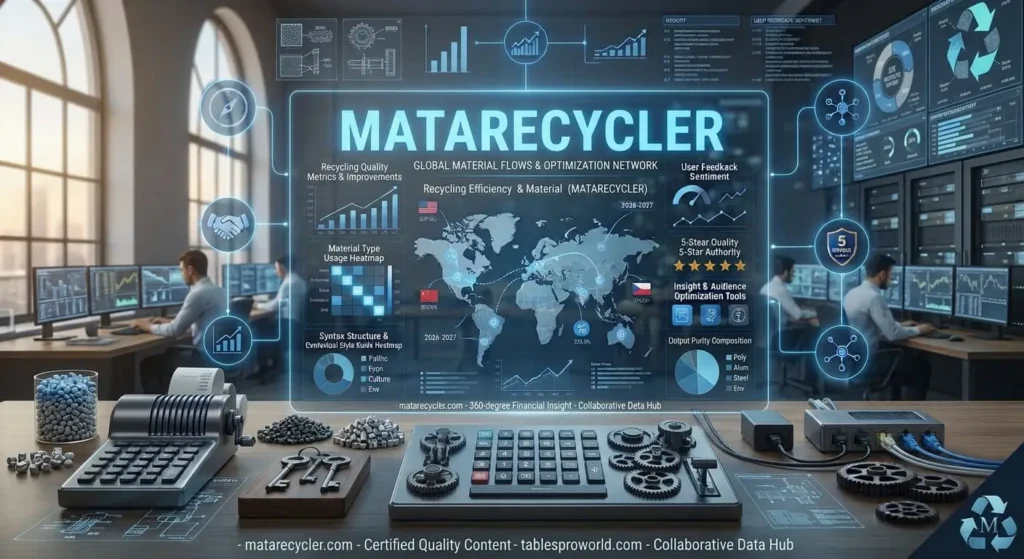
MataRecycler is a name that may attract attention from people researching recycling, waste management, environmental awareness, and sustainable practices. However, understanding what MataRecycler actually represents requires looking beyond the name itself. A recycling-related name does not automatically mean that a website operates a waste collection service, manufactures recycling equipment, or provides advanced environmental technology. MataRecycler
MataRecycler is a name that may attract attention from people researching recycling, waste management, environmental awareness, and sustainable practices. However, understanding what MataRecycler actually represents requires looking beyond the name itself. A recycling-related name does not automatically mean that a website operates a waste collection service, manufactures recycling equipment, or provides advanced environmental technology.
MataRecycler is associated with an online informational resource focused on recycling and sustainability topics. Its general subject matter includes waste management, recycling methods, reuse, and environmentally responsible practices. This makes it relevant to readers who want to learn more about how materials are handled and why responsible resource use matters.
At the same time, there is an important difference between an informational website and a company that physically collects or processes waste. There is also a difference between discussing modern recycling technologies and developing a specific technology product. These distinctions are essential when evaluating MataRecycler because detailed information about its ownership, operational structure, and any dedicated commercial technology is not sufficiently established.
This article explores the meaning of MataRecycler, its stated purpose, its potential applications, and the considerations readers should keep in mind. It also explains how to evaluate recycling information, understand the limitations of general guidance, and determine whether an informational resource is suitable for a particular need.
Quick Facts About MataRecycler
| Fact | Details |
|---|---|
| Name | MataRecycler |
| Category | Recycling and sustainability information website |
| Official Website | MataRecycler.com is associated with the name; readers should verify the domain before relying on specific claims |
| Primary Purpose | Sharing information related to recycling, waste management, reuse, and environmental awareness |
| Main Features | Educational content and information about recycling-related topics; specialized product features have not been independently established |
| Intended Audience | Individuals, students, educators, businesses, and readers interested in recycling and sustainability |
| Practical Uses | Learning about recycling principles, exploring waste-reduction practices, and identifying questions for further research |
| Ownership Information | A verified founder, ownership structure, and detailed organizational background have not been established |
What Is MataRecycler?
MataRecycler is a name associated with an online resource covering recycling and sustainability-related subjects. The most cautious way to describe it is as an informational website rather than automatically treating it as a recycling company, a physical recycling facility, or a specialized technology platform.
The subject matter associated with MataRecycler concerns the management of waste, the reuse of materials, recycling practices, and environmental awareness. These topics are relevant to people who want to understand how discarded products can be handled more responsibly and what practical considerations influence recycling.
For example, someone researching recycling may want to understand why different materials require different collection methods, why contamination can affect recycling operations, or how reuse differs from recycling. Educational content can help explain these concepts and introduce readers to the terminology used in the wider waste-management industry.
However, an informational resource does not necessarily provide the services it discusses. A website may explain recycling machinery without manufacturing machinery. It may describe waste collection without collecting waste itself. Similarly, publishing sustainability-related information does not establish that a website has achieved measurable environmental results.
This distinction is important when discussing MataRecycler. Its name suggests a relationship with recycling, but the specific activities, technical capabilities, and commercial services associated with the name must be established separately.
Understanding the Meaning of MataRecycler
The name MataRecycler appears to combine the term “Mata” with the word “Recycler.” Although the second part suggests a connection with recycling, a definitive official meaning for the complete name has not been established.
It is therefore more accurate to treat MataRecycler as a proper name rather than assign it an invented technical definition. Readers searching for the MataRecycler meaning should focus on the website or service associated with the name instead of relying entirely on assumptions drawn from the wording.
Names can communicate a general theme, but they do not confirm an organization’s activities. A website with a recycling-related name might publish educational content, provide commercial services, develop software, or sell equipment. These possibilities are not interchangeable, and the actual purpose must be assessed through identifiable information about the organization.
Is MataRecycler a Website or a Recycling Service?
The name is associated with a recycling and sustainability information website. However, publicly established details do not sufficiently demonstrate that MataRecycler operates a physical recycling facility, manages a waste collection network, or sells a specific recycling machine.
This does not prove that no other service exists under a similar name. It means that readers should avoid presenting unverified services as confirmed facts.
Anyone looking for an educational resource may approach the website as a place to explore relevant topics. Someone looking to arrange waste collection or purchase recycling equipment would need much more specific information, including details about the service provider, its operations, and the product or service being offered.
The Main Purpose of MataRecycler
The central theme associated with MataRecycler is recycling education and environmental awareness. Its subject matter relates to understanding how waste is managed, why materials are separated, and how reuse and recycling fit into responsible resource management.
These topics address practical questions that people encounter in everyday life. Households generate packaging and discarded products, businesses produce operational waste, and communities need systems for collecting and processing different materials. Understanding the principles behind these activities can help people recognize that waste management involves more than simply throwing an item away.
One important part of recycling education is explaining that different materials behave differently during processing. Paper, glass, metals, plastics, electronic equipment, and organic waste may require different treatment methods. Their suitability for recycling depends on material composition, contamination, available processing facilities, and local collection arrangements.
Another important topic is the distinction between reducing waste and recycling waste. Reducing consumption can prevent unnecessary material from entering the waste stream, while reuse can extend a product’s useful life. Recycling may recover materials after an item is no longer suitable for its original purpose.
An informational resource can help readers understand these differences and identify practical questions about their own circumstances.
Nevertheless, educational information alone does not establish that MataRecycler directly manages waste, provides local collection services, or operates an environmental technology system. Its potential value should be assessed according to the information it actually provides.
How MataRecycler Works
Understanding how MataRecycler works requires distinguishing the website’s informational role from the processes used by recycling facilities.
The information available does not establish a proprietary MataRecycler process involving automated waste identification, smart bins, artificial intelligence, sensor-based monitoring, or industrial material sorting. Those functions should not be attributed to the name without specific supporting documentation.
As an informational resource, the website can be approached as a starting point for learning about recycling and sustainability. Readers can explore relevant subjects, develop a basic understanding of a topic, and identify details that require further confirmation.
A sensible way to use such information involves three stages.
1. Identify the Information You Need
Begin by determining what you want to understand. You might be interested in household recycling, commercial waste management, the reuse of materials, or the environmental implications of particular products.
A clear question makes it easier to evaluate whether an article addresses your needs. General background information may be enough for learning a basic concept, while practical disposal decisions often require location-specific instructions.
2. Understand the Relevant Concepts
Educational material can introduce readers to important terms and explain the broad stages involved in recycling. This may include material separation, collection, transportation, processing, and the recovery of usable resources.
These stages do not apply identically to every material or facility. The process used for one type of waste may differ significantly from the process used for another.
Readers should therefore use general explanations to develop an understanding of the subject rather than assume that every recycling operation follows the same procedure.
3. Verify Practical Details
Before acting on recycling advice, confirm any details that depend on location, material type, or specialist requirements.
A local authority or waste collection provider may specify which items are accepted, how they should be prepared, and where special materials must be taken. Businesses may also have additional requirements depending on the waste they produce.
This approach helps readers turn general knowledge into appropriate action without assuming that a website can replace local guidance.
Main Features and Functions of MataRecycler
The phrase “MataRecycler features” requires careful interpretation. An informational website has a different role from a software application or physical recycling system. The features discussed here relate to the website’s stated educational subject matter, not to an unverified commercial product.
Recycling Information
Recycling information is a central topic associated with MataRecycler. Educational material about recycling can help readers understand why materials are recovered, how sorting influences processing, and why some items cannot be handled through ordinary collection programs.
The practical value of such information depends on its clarity and accuracy. A helpful explanation should identify the relevant material, describe the general principle, and clarify when local rules or specialist requirements may differ.
Readers should evaluate individual articles rather than assume that every published statement is automatically correct or current.
Waste-Management Education
Waste management involves more than recycling. It may include reducing waste generation, separating materials, arranging collection, managing residual waste, and ensuring that particular items receive appropriate treatment.
Information about these subjects can help readers understand the wider system in which recycling takes place. It may also help businesses and households recognize questions they should ask when reviewing their waste practices.
However, discussing waste management does not mean that MataRecycler itself provides collection, transportation, or processing services. Those activities require separate confirmation.
Reuse and Resource Conservation
Reuse is another important concept within sustainability education. It involves keeping a product or material in use rather than immediately discarding it.
Examples include repairing an item, using a durable container repeatedly, donating functional products, or finding another appropriate use for materials that would otherwise be thrown away.
Learning about reuse can broaden a reader’s understanding of waste reduction. Instead of considering recycling the only available option, people can examine whether unnecessary waste can be avoided in the first place.
The relevance of this subject does not establish that MataRecycler operates a reuse marketplace or organizes product donations. Such services would need to be documented separately.
Environmental Awareness
Environmental awareness involves understanding how consumption, discarded materials, and resource use relate to wider environmental concerns.
Educational content can explain why responsible disposal matters and introduce concepts such as resource recovery, contamination, and the environmental costs associated with producing and transporting materials.
Readers should distinguish these general principles from claims about a specific organization’s performance. A website that discusses environmental responsibility has not necessarily demonstrated that its own activities reduce waste or emissions.
Accessible Explanations
Informational resources can be useful when they explain unfamiliar concepts in clear language. Readers who are new to recycling may benefit from straightforward definitions and practical examples before exploring more technical material.
Accessibility also requires appropriate context. Recycling instructions should not be oversimplified to the point that readers misunderstand local requirements or the limitations of particular materials.
Whether MataRecycler achieves this consistently depends on the quality of its individual pages. Its educational focus alone does not prove that every topic is comprehensive or equally useful.
Advanced Features That Remain Unconfirmed
Some descriptions associated with recycling-related names may refer to artificial intelligence, automated sorting, smart containers, sensor networks, mobile applications, or real-time waste tracking.
Although these technologies exist in the wider industry, they should not automatically be considered MataRecycler features.
A confirmed technology product would normally need identifiable documentation, a clear description of its functions, operating requirements, and evidence that the product is associated with the named organization.
Without such information, the responsible conclusion is that these advanced features remain unverified rather than presenting them as established capabilities.
Potential Uses and Applications of MataRecycler
The potential uses of MataRecycler depend on its informational role. Its recycling and sustainability subject matter may be relevant to people seeking introductory knowledge, practical concepts, or ideas for further research.
Household Recycling
Households regularly encounter packaging, paper, cardboard, glass containers, plastic products, batteries, and electronic items. Knowing how to handle each category can be confusing because local programs do not necessarily accept the same materials.
Recycling education can help people understand why separation matters and why certain items require special handling.
MataRecycler may be relevant as a starting point for exploring these subjects. However, readers should confirm local collection requirements before placing materials in a recycling bin or taking them to a disposal facility.
Educational Projects
Students may research recycling and sustainability for school assignments, presentations, or personal learning. An introductory explanation can help them understand terminology and identify specific questions for further investigation.
Educators may also explore recycling-related material when preparing classroom discussions or awareness activities.
For formal academic work, readers should evaluate the accuracy of individual claims and seek appropriate evidence when required. General information can introduce a subject, but it may not be sufficient for research that requires detailed data or technical analysis.
Small-Business Waste Practices
Small businesses may produce cardboard, paper, packaging, electronic equipment, and other waste through everyday operations.
Learning about waste reduction can help business owners identify the types of materials they generate and prepare questions for their collection providers. For example, they may need to know whether packaging must be separated, whether electronic equipment requires special handling, or whether their waste contractor accepts a particular material.
An informational website may help with general understanding, but it cannot replace a confirmed commercial waste-management service or advice about applicable regulations.
Community Awareness Activities
Community groups may discuss recycling during educational events, neighborhood initiatives, or environmental awareness campaigns.
General explanations of recycling and reuse can help participants understand why responsible material handling matters. However, community organizers should confirm any practical instructions with the relevant local authority before distributing them.
The available information does not establish specific community partnerships or organized recycling campaigns operated by MataRecycler. These should not be assumed merely because the website discusses environmental awareness.
Research Into Recycling Technology
Readers interested in environmental technology may investigate sorting systems, waste-monitoring tools, material recovery, and other developments in the recycling industry.
MataRecycler’s subject area may be relevant to this general interest. However, anyone researching a particular technology should establish whether MataRecycler actually offers that technology or simply discusses related topics.
This distinction is particularly important when evaluating equipment, commercial opportunities, or technical claims.
Who Might Benefit From MataRecycler?
Different groups may find recycling-related educational material useful, depending on their needs and the quality of the information available.
Individuals and families may want to understand everyday recycling practices, learn about waste reduction, or explore ways to reuse suitable products. They benefit most from clear explanations that distinguish general principles from local disposal instructions.
Students and educators may use introductory material to understand environmental terminology and identify topics for further research. For assignments that require detailed evidence, they should verify important claims independently.
Small-business owners may be interested in understanding the materials their operations generate and identifying questions to discuss with a waste collection provider. General information can help them explore the subject, but commercial arrangements require specific details.
Community organizations may find recycling education relevant when discussing responsible resource use. They should ensure that any practical guidance they share matches the local services available.
Environmental enthusiasts may explore the wider relationship between consumption, reuse, recycling, and sustainability. Educational material can provide a starting point for deeper investigation.
These groups are potential audiences based on the subject matter. They should not be interpreted as confirmed customers, registered users, or established partners of MataRecycler.
Potential Benefits of MataRecycler
The potential benefits of MataRecycler should be assessed according to its role as an information resource rather than through unsupported claims about commercial performance.
Better Understanding of Recycling
Clear educational material can help readers understand how recycling differs from reuse and waste reduction. This knowledge may make it easier to identify the appropriate questions when dealing with particular materials.
The benefit depends on the accuracy and relevance of the information. Readers should confirm important instructions before relying on them in practical situations.
Greater Awareness of Waste Reduction
Learning about responsible resource use can encourage people to consider whether products can be reused, repaired, or kept in service longer.
This can broaden the discussion beyond simply deciding which bin to use. However, reading about waste reduction does not prove that a person changes their behavior or that a measurable environmental result follows.
A Starting Point for Further Learning
An introductory website can help readers become familiar with terminology and identify subjects that require deeper research.
For example, a reader learning about electronic waste may discover that batteries, computers, and other devices require different handling from ordinary packaging. That understanding can guide further research into appropriate collection arrangements.
Convenience for General Readers
People who are new to sustainability topics may prefer accessible explanations before exploring technical documents or regulatory guidance.
A well-organized article can make an unfamiliar subject easier to approach. The actual usefulness of MataRecycler depends on the specific content a reader finds and whether it addresses the question clearly.
A Wider Perspective on Sustainability
Recycling is only one part of responsible resource management. Information about reducing consumption, reusing products, and managing waste appropriately can help readers understand the broader picture.
This perspective can be useful because not every item can be recycled through every local system, and recycling does not eliminate all environmental costs associated with producing or transporting materials.
These are potential benefits of recycling education in general. They do not establish that MataRecycler has achieved measurable waste reductions, financial savings, or other independently verified outcomes.
Limitations and Important Considerations
Understanding the limitations of MataRecycler is essential for forming a balanced view of its purpose and usefulness.
Limited Ownership Information
A clearly verified founder, ownership structure, and detailed organizational history have not been established in the information available for this article.
Readers should therefore avoid repeating unsupported claims about who created MataRecycler, where its organization is based, or when it was launched.
If organizational identity matters for a commercial decision, additional documentation should be obtained before relying on the name alone.
No Confirmed Commercial Recycling System
The available information does not sufficiently establish that MataRecycler operates a physical recycling facility, provides waste collection, or sells a specific recycling machine.
People seeking those services should identify the actual provider and verify its capabilities, service area, operating arrangements, and terms.
An educational website should not be treated as a substitute for a confirmed service provider.
Unverified Technical Capabilities
Claims involving artificial intelligence, automated sorting, smart bins, or real-time waste monitoring require specific evidence linking those functions to MataRecycler.
The existence of similar technology in the wider industry does not establish that MataRecycler owns, operates, or sells it.
Readers should request technical specifications and credible evidence before accepting such claims as fact.
Recycling Advice May Depend on Location
Recycling rules differ across municipalities and waste collection programs. Materials accepted in one location may not be accepted in another.
A general website may explain common principles, but it cannot automatically establish the requirements of a particular local service.
Readers should verify disposal instructions with the relevant authority or collection provider.
No Verified Environmental Performance Figures
The website’s stated environmental focus does not establish measurable results attributable to MataRecycler.
Claims about waste diverted from landfills, materials recovered, emissions avoided, or other environmental outcomes require documented measurements and a clear explanation of how those figures were calculated.
Without such evidence, these results should not be attributed to the website.
Information May Need Updating
Recycling guidance can change when local collection programs, processing facilities, or regulations change. Readers should pay attention to whether information is current, especially when it concerns specific services or requirements.
General explanations may remain useful, but practical instructions should be checked before being applied.
MataRecycler and Sustainability
Sustainability is relevant to MataRecycler because its stated subject matter includes recycling, reuse, waste management, and environmental awareness. Understanding these topics can help readers assess why responsible resource use matters.
However, a sustainability-related mission is not proof of measurable environmental impact. The distinction between explaining a practice and demonstrating its results should remain clear.
Reduce, Reuse, and Recycle
Reducing waste involves preventing unnecessary material from entering the waste stream. People may do this by choosing durable products, avoiding unnecessary packaging, or purchasing only what they need.
Reuse involves extending a product’s useful life. Repairing an item, donating a functional product, or using a reusable container can delay the need to replace it.
Recycling involves recovering suitable materials so that they can be processed for further use. Its effectiveness depends on the material, collection arrangements, processing facilities, and quality of the recovered material.
These approaches work together, but they are not identical. Recycling is valuable, while reducing unnecessary consumption and reusing suitable products may prevent waste from being generated in the first place.
Why Material Separation Matters
Recycling facilities need materials that are suitable for their processing systems. Contamination can make materials more difficult to recover and may affect the quality of the final output.
The correct separation method depends on the local program and the material involved. Some services accept several types of packaging together, while others require specific separation or designated drop-off arrangements.
Educational content can explain these principles, but readers should confirm local instructions before disposing of materials.
Electronic Waste and Special Handling
Electronic equipment may contain recoverable materials alongside components that require careful handling. Batteries and some electronic products can create safety or environmental concerns if discarded incorrectly.
Readers should use suitable collection or take-back arrangements rather than assume that electronics belong in ordinary household recycling.
The relevant process depends on the item and local facilities. General sustainability information can raise awareness, but specific handling instructions should come from an appropriate provider or authority.
Evaluating Environmental Claims
A meaningful environmental assessment requires evidence about what an organization actually does and what results its activities produce.
For a recycling operation, useful measurements might include the quantity of material collected, the proportion successfully recovered, contamination levels, energy use, and the destination of processed materials.
Those measurements also need a clear period and methodology. A single figure may not explain the full environmental impact of a process.
No verified environmental performance figures have been established for MataRecycler in the information available for this article. Its sustainability focus should therefore be understood as a description of its subject matter rather than proof of quantified environmental achievements.
How to Evaluate MataRecycler
Readers can evaluate MataRecycler more effectively by identifying their goal and checking whether the available information meets their needs.
Confirm the Exact Website
Check the complete domain before relying on information associated with the MataRecycler name. Websites with similar names may be separate organizations, and their content or ownership should not be assumed to be the same.
Review the available About and Contact information to understand how the website describes itself.
Assess the Quality of the Information
A useful article should explain its subject clearly, distinguish general guidance from local requirements, and avoid presenting uncertain claims as established facts.
Readers should pay particular attention to precise statistics, technical descriptions, and environmental claims. Such statements are more useful when the methodology and supporting information are clear.
Verify Commercial Claims
If MataRecycler is presented as a company selling equipment or providing recycling services, look for details identifying the actual provider and describing the product or service.
For equipment, relevant information may include technical specifications, operating requirements, maintenance arrangements, and documented performance. For collection services, readers should confirm service areas, accepted materials, costs, and contractual terms.
These details should be established before making a purchase or entering a business arrangement.
Consider Privacy and Information Sharing
Before registering for an online service or submitting personal information, understand why the information is needed and how it will be handled.
Read the available privacy information and avoid providing unnecessary sensitive or financial details when seeking general educational material.
This is standard online caution, not an allegation that MataRecycler has mishandled user information.
Match the Resource to the Task
An informational website may be suitable for understanding general recycling concepts. A local authority is usually more appropriate for confirming municipal collection rules, while a qualified provider may be necessary for commercial waste handling.
Selecting the right type of resource helps prevent general information from being mistaken for a specific operational guarantee.
MataRecycler Compared With Alternatives
The most relevant alternatives depend on what a reader expects to accomplish. Since MataRecycler is associated with recycling information, comparisons should focus on resources that provide similar information or address related practical needs.
Local Government Websites
Local government websites can provide instructions about household collection, accepted materials, collection schedules, and designated disposal locations.
Their main advantage is local relevance. General educational material may explain recycling principles, but municipal information is better suited to confirming the rules that apply in a particular area.
Recycling Collection Providers
Collection providers may offer practical services for transporting or processing particular types of waste. Their services, accepted materials, and availability depend on the provider and location.
Someone who needs waste collected should verify the provider’s operating arrangements rather than rely on an informational website alone.
Environmental Organizations
Environmental organizations and educational publications may explain waste reduction, reuse, recycling, and resource conservation.
Readers can compare the clarity of their explanations, the relevance of the information, and the quality of supporting evidence. For important decisions, consulting more than one suitable resource may be beneficial.
Recycling Technology Companies
Businesses researching sorting equipment or waste-monitoring systems should evaluate identifiable technology providers using documented specifications, demonstrated capabilities, maintenance requirements, and operating costs.
MataRecycler should not be treated as a comparable equipment supplier unless a specific product or service is established.
There is not enough verified information to rank MataRecycler against individual commercial alternatives. The appropriate choice depends on whether the reader needs general education, local instructions, a collection service, or industrial equipment.
Frequently Asked Questions About MataRecycler
What is MataRecycler?
MataRecycler is a name associated with an online informational resource focused on recycling, waste management, reuse, and sustainability. The available information supports describing it primarily as an educational website rather than a confirmed commercial recycling technology provider.
What does MataRecycler mean?
MataRecycler is the name used by the website. Although “Recycler” suggests a connection with recycling, an official definition or expansion of the complete name has not been established.
What is the main purpose of MataRecycler?
Its stated subject matter concerns recycling information, waste management, reuse, and environmental awareness. Its potential role is educational, helping readers understand relevant concepts and identify questions for further research.
How does MataRecycler work?
MataRecycler can be approached as an informational website where readers explore recycling and sustainability topics. A proprietary waste-processing system or dedicated automated recycling process associated with the name has not been verified.
What are the main features of MataRecycler?
Its stated focus includes educational information about recycling, waste management, sustainability, and related environmental subjects. Advanced capabilities such as AI-powered sorting, smart-bin monitoring, or specialized recycling software should not be considered confirmed without specific documentation.
Who can benefit from MataRecycler?
Individuals, students, educators, community groups, and businesses interested in recycling information may find its subject matter relevant. Practical decisions about local disposal, commercial services, or technical equipment require additional verification.
Is MataRecycler a website, company, or service?
The clearest description is that MataRecycler.com is an informational website. A verified ownership structure, physical recycling operation, and specific commercial technology product have not been established in the information available for this article.
Where can readers find official information about MataRecycler?
Readers can begin by checking the website associated with the MataRecycler name and reviewing its available About and Contact information. They should verify the exact domain and avoid assuming that similarly named websites belong to the same organization. Local recycling instructions should be confirmed with the relevant authority or waste provider.
Conclusion
MataRecycler is associated with recycling and sustainability information, making it relevant to readers who want to understand waste management, material reuse, and environmentally responsible practices. Its potential value lies in helping people explore these topics and develop a clearer understanding of the questions involved.
The most important consideration is the distinction between an informational website and a verified recycling service or technology product. The available information does not sufficiently establish a specific commercial recycling system, advanced automated features, a confirmed ownership structure, or measurable environmental results associated with MataRecycler.
Readers interested in general knowledge can use recycling-related educational material as a starting point while evaluating individual claims carefully. Those who need practical disposal instructions should check local requirements, while businesses considering services or equipment should seek clear documentation from identifiable providers.
A balanced understanding of MataRecycler depends on separating established information from assumptions. By doing so, readers can assess its relevance realistically and make better-informed decisions about the recycling and sustainability questions that matter to them.
For More Visits: Ourmagazine















Leave a Comment
Your email address will not be published. Required fields are marked with *