
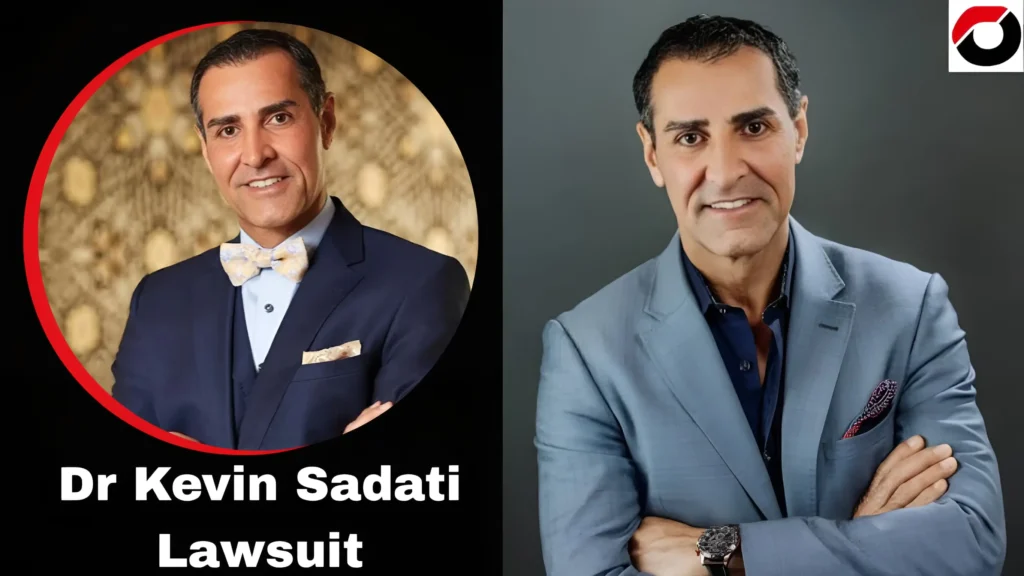
When people search for the Dr. Kevin Sadati lawsuit, they are often looking for straightforward answers. Was a lawsuit filed? What was the dispute about? Did a court establish that the surgeon was responsible for wrongdoing? These questions deserve careful consideration because legal allegations involving medical professionals can influence public opinion, professional reputations, and decisions
When people search for the Dr. Kevin Sadati lawsuit, they are often looking for straightforward answers. Was a lawsuit filed? What was the dispute about? Did a court establish that the surgeon was responsible for wrongdoing? These questions deserve careful consideration because legal allegations involving medical professionals can influence public opinion, professional reputations, and decisions about personal health.
Dr. Kevin Sadati is a physician associated with facial plastic and cosmetic surgery in Newport Beach, California. A civil case identified as Jean Shir v. Kevin Sadati, M.D., et al. involved allegations of professional negligence connected to cosmetic surgery. The case included significant court proceedings in 2022 and subsequent trial-related developments in 2023.
Understanding this legal history requires more than repeating accusations or interpreting an individual court ruling as proof of malpractice. Readers must distinguish between allegations, procedural decisions, jury findings, and final judgments. Each represents a different stage or aspect of the legal process.
This article examines the background of Dr. Kevin Sadati, the nature of the documented legal dispute, the significance of the proceedings, and practical ways to evaluate claims involving cosmetic surgeons. It also explains how patients can research medical professionals without relying exclusively on online reviews or unverified commentary.
Quick Bio Table
| Fact | Details |
|---|---|
| Full Name | Dr. Kevin Sadati |
| Profession | Physician specializing in facial plastic and cosmetic surgery |
| Known For | Facial rejuvenation procedures, facelift surgery, and cosmetic surgical techniques |
| Professional Location | Newport Beach, California |
| Medical Background | His professional background includes osteopathic medical education and surgical training |
| Medical Specialty | Facial plastic and cosmetic surgery |
| Medical Practice | Associated with the Gallery of Cosmetic Surgery |
| Legal Matter | A civil professional-negligence case identified as Jean Shir v. Kevin Sadati, M.D., et al. |
| Nature of Legal Dispute | Allegations of professional negligence associated with cosmetic surgery |
| Professional Activities | Cosmetic procedures, facial rejuvenation, and patient consultations |
Who Is Dr. Kevin Sadati?
Dr. Kevin Sadati is known professionally for his work in facial plastic and cosmetic surgery. His practice has been associated with Newport Beach, California, a location with a substantial market for elective cosmetic procedures and aesthetic treatments.
Facial plastic surgery encompasses procedures intended to change or restore aspects of the face. Depending on the patient’s needs, these procedures may address facial aging, skin laxity, the appearance of the neck, or other aesthetic concerns. Some operations are primarily cosmetic, while others may have reconstructive or functional objectives.
A physician working in this field must consider not only the appearance a patient hopes to achieve but also anatomy, healing, surgical risks, and the possibility of complications. A procedure that appears relatively straightforward in promotional material can involve complex medical decisions when performed on an individual patient.
Understanding His Professional Work
Facial rejuvenation is a broad area of cosmetic medicine. It can include surgical procedures such as facelifts, as well as other treatments designed to address visible signs of aging.
Patients considering these procedures may be interested in reducing loose skin, improving facial contours, or achieving a more refreshed appearance. However, individual outcomes depend on numerous factors, including anatomy, health, the procedure selected, surgical technique, and healing.
It is important to distinguish a surgeon’s professional reputation or marketing claims from independently verified credentials. Prospective patients should confirm relevant licensing, training, and certifications through the organizations responsible for issuing them.
A physician’s experience with one procedure does not necessarily demonstrate equivalent expertise in every other cosmetic operation. Patients should therefore ask specific questions about the procedure they are considering rather than relying on general descriptions of a surgeon’s practice.
Why His Name Appears in Legal Searches
Searches for Dr. Kevin Sadati’s legal history are associated with a civil case involving allegations of professional negligence. Such searches may bring together court-related information, commentary, patient experiences, and general discussions about cosmetic surgery.
These materials should not automatically be treated as equivalent evidence.
A court complaint records claims made by a party. A judicial ruling explains a court’s decision on a particular issue. A jury verdict addresses the questions submitted to the jury, while a judgment records the court’s formal disposition. Each document must be interpreted according to its purpose and procedural context.
The existence of a legal dispute does not establish every allegation made during that dispute. Likewise, an early procedural ruling cannot necessarily explain the ultimate result of a case that continued through later proceedings.
What Is the Dr. Kevin Sadati Lawsuit About?
The documented legal matter associated with this search is Jean Shir v. Kevin Sadati, M.D., et al., a civil action filed in Orange County, California.
The dispute concerned allegations of professional negligence connected to cosmetic surgery. The proceedings addressed issues involving an alleged facial nerve injury, the applicable standard of medical care, and questions about whether the treatment caused the claimed harm.
These are important issues in medical malpractice litigation because a patient’s dissatisfaction with a result and a legally established failure to provide appropriate care are not the same thing.
A cosmetic procedure may produce an unexpected outcome even when a medical professional has acted appropriately. Conversely, a complication may warrant legal examination if evidence suggests that the care provided fell below the applicable standard.
The legal process exists to evaluate such disagreements through evidence, applicable law, and the appropriate decision-making procedures.
The Parties and the Claims
Jean Shir was identified as the plaintiff in the proceedings. Kevin Sadati and the Gallery of Cosmetic Surgery Professional Corporation were identified as defendants.
In a civil negligence case, the plaintiff generally seeks to establish that the defendant owed a relevant duty, failed to meet the applicable standard of care, and caused legally recognizable harm.
The precise requirements depend on the applicable law and circumstances. Medical evidence, treatment records, expert opinions, and the parties’ competing accounts may all become important.
A defendant may dispute the alleged injury, challenge the proposed explanation for how it occurred, or argue that the treatment met the required professional standard. A plaintiff may present medical records, expert testimony, and other evidence in support of the claim.
The fact that both sides advance competing positions is a normal feature of litigation. It does not mean that every claim is equally supported or that the truth can be determined from the wording of a complaint alone.
What the 2022 Court Proceedings Mean
In November 2022, the court considered a request by the defendants for summary judgment or summary adjudication. Such requests ask a court to resolve a case or particular issues before trial when the applicable legal requirements are satisfied.
The court did not grant the requested pretrial resolution. The ruling discussed evidentiary questions and disagreements concerning the alleged injury, medical standards, and causation.
This decision is relevant because it shows that the dispute involved factual and evidentiary questions that the court was not prepared to resolve through the requested motion.
However, denying summary judgment is not the same as finding a defendant liable for malpractice. It means that the request for pretrial resolution was denied under the applicable legal standard. The underlying claims may still need to be decided through further proceedings.
Readers should therefore avoid describing the 2022 ruling as a final judgment against the surgeon. Its significance must be understood within the broader timeline of the case.
What Happened After the Initial Court Ruling?
The reported legal timeline includes subsequent trial-related proceedings in 2023. Publicly indexed summaries identify a special verdict in July 2023 and a judgment entry in August 2023.
These developments matter because the initial ruling was not the final stage of the litigation. A complete account must distinguish the court’s pretrial decisions from the jury’s answers and the judgment entered afterward.
The exact meaning of the final result depends on the actual verdict form, judgment, and any later orders. Without examining those documents in sufficient detail, it would be inappropriate to invent a compensation amount, characterize the outcome as a definitive finding of malpractice, or claim that every allegation was rejected.
Why a Jury Verdict Requires Context
A special verdict asks a jury to answer specific questions submitted for its consideration. Depending on the case, these questions may address negligence, causation, responsibility, or damages.
The questions themselves matter. So do the jury’s answers and the legal consequences of those answers.
For example, a verdict may resolve one claim while leaving another issue unaffected. A judgment may reflect the answers to particular questions rather than a broad statement about every allegation made during the dispute.
That is why readers should not rely on a short headline or a summary that mentions a verdict without explaining what the jury actually decided.
Was There a Settlement or Financial Award?
A settlement is an agreement between parties to resolve a dispute. A jury verdict is a decision reached through the trial process. Although both may be followed by a judgment or other legal documents, they are not interchangeable.
A settlement may include financial terms and other conditions, and it does not necessarily include an admission of liability. A jury verdict may address damages, but any award must be understood in light of the jury’s answers and the judgment entered by the court.
The available information discussed in this article does not establish a sufficiently verified compensation figure or settlement amount to report as fact.
Readers should be cautious about online claims that provide dramatic payout figures without explaining the underlying documents. When financial consequences are central to understanding a lawsuit, the actual judgment and relevant post-trial orders are the appropriate starting points.
Understanding Medical Malpractice Allegations
The legal dispute associated with Dr. Kevin Sadati illustrates a broader question: when does an unfavorable medical outcome become a matter of professional negligence?
Cosmetic surgery can involve meaningful medical risks even when the procedure is elective. Possible complications may include infection, bleeding, scarring, asymmetry, changes in sensation, nerve injury, anesthesia-related complications, and prolonged recovery.
The nature and likelihood of these risks vary by procedure and patient. Some complications occur despite appropriate medical care. Others may require examination to determine whether a preventable error contributed to the outcome.
A fair assessment therefore requires more than looking at the result alone.
The Standard of Care
The standard of care refers broadly to the level of professional care required under the circumstances.
In a medical malpractice case, the question is not simply whether a patient experienced a poor outcome. The issue is whether the medical professional’s conduct fell below the legally applicable standard and whether that failure caused harm.
The assessment may consider the patient’s medical history, the procedure selected, the treatment provided, postoperative instructions, monitoring, and the response to developing symptoms.
Expert testimony is often important because medical decisions involve specialized knowledge. Qualified experts may disagree about what a reasonable practitioner should have done or whether a particular decision contributed to an injury.
Those disagreements must be evaluated through the evidence and applicable law rather than resolved through assumptions.
Causation and Medical Evidence
Causation concerns the relationship between the alleged negligent act and the harm claimed by the patient.
A patient may experience symptoms after surgery, but the timing alone does not always establish why those symptoms occurred. The medical evidence must support the relevant causal connection under the applicable legal standards.
Factors such as pre-existing conditions, the nature of the procedure, the healing process, and other medical circumstances may be relevant.
In the Sadati litigation, the court’s discussion of disputed issues concerning an alleged facial nerve injury illustrates why causation and expert evidence can become central to a malpractice dispute.
The existence of disagreement about these issues does not itself establish which party’s explanation is correct. That determination depends on the evidence and the outcome of the relevant proceedings.
The Role of Informed Consent
Informed consent is another important aspect of elective medical treatment.
Before agreeing to a procedure, patients should receive appropriate information about material risks, expected benefits, available alternatives, and the likely consequences of declining treatment.
A signed consent form can be relevant evidence, but it does not automatically settle every question about whether consent was adequate. The information provided, the circumstances of the discussion, and applicable legal requirements may also matter.
Likewise, an unexpected outcome does not automatically mean that informed consent was inadequate.
Patients should feel comfortable asking questions about potential complications and requesting clarification when medical explanations are difficult to understand.
Lawsuits, Patient Complaints, and Disciplinary Actions Are Different
People researching Dr. Kevin Sadati allegations may encounter different types of information online. Understanding the distinction between these records is essential.
A civil lawsuit is a formal proceeding in which a party asks a court to resolve a dispute. A patient review is an account of an individual’s experience. A licensing complaint raises a concern with a regulatory body, while a disciplinary decision reflects action taken by an authority with the relevant legal power.
These categories have different evidentiary and legal significance.
A complaint does not automatically establish wrongdoing. A review does not substitute for a court finding. A licensing investigation does not necessarily lead to discipline, and a settlement does not always indicate that a defendant admitted liability.
What a Civil Complaint Establishes
A civil complaint identifies the claims a plaintiff is bringing and the relief being sought. It explains the plaintiff’s allegations at the relevant stage of the case.
It does not, by itself, establish that the allegations are true.
The defendant may file a response, challenge the legal sufficiency of the claims, or dispute the factual account. The case may then proceed through motions, discovery, settlement discussions, or trial.
Readers should distinguish between the filing of a complaint and the final resolution of the issues it raises.
What a Licensing Complaint Establishes
A licensing complaint is generally directed to a professional regulator rather than a civil court.
A regulator may review information, request records, investigate conduct, or take other steps under its governing rules. The outcome may range from no further action to formal discipline, depending on the circumstances.
The filing of a complaint does not necessarily mean that the regulator has substantiated the allegations.
For prospective patients, licensing information is useful because it can help establish a physician’s current professional status and identify formal disciplinary actions that may be publicly available.
However, licensing records and court records serve different purposes. Neither should be treated as a complete substitute for the other.
How to Evaluate Dr. Kevin Sadati Patient Reviews
Online patient reviews can offer useful perspectives on communication, scheduling, billing, recovery instructions, and experiences with a medical practice.
However, reviews are not a substitute for independently verified medical or legal information.
A review may describe a genuine experience while omitting details that would be important to a clinical or legal assessment. Readers generally cannot determine from a short post whether a procedure was performed appropriately or whether a complication was preventable.
Positive reviews also have limitations. A patient who experienced a satisfactory result cannot guarantee that another patient will have the same outcome.
Look Beyond Star Ratings
A star rating provides only a limited snapshot of an individual’s opinion.
When evaluating reviews, look for specific information about the consultation process, clarity of explanations, postoperative support, and how the practice addressed questions or concerns.
Specific descriptions can help prospective patients identify topics to discuss during a consultation. They should not automatically be treated as proof of professional misconduct.
Broad accusations without supporting information deserve particular caution. The same principle applies to overly promotional statements that promise exceptional results without explaining risks or limitations.
Consider Patterns Carefully
If multiple independent reviews describe similar experiences, it may be reasonable to investigate those concerns further.
However, several similar comments do not automatically establish a medical or legal conclusion. Reviews may be incomplete, circumstances may differ, and the accounts may not provide enough information to assess what happened.
A balanced approach is to identify the underlying concern, look for reliable corroborating information where available, and ask direct questions before making a decision.
Pay Attention to Communication and Follow-Up
Patients should understand how a medical practice handles postoperative concerns and what support is available during recovery.
Before surgery, ask whom to contact if symptoms develop, how urgent concerns are addressed, and what follow-up appointments are included.
Clear answers can help patients assess whether the practice’s approach meets their needs.
These considerations are useful when researching any surgeon. They do not require assuming that an allegation against a particular physician has been proven.
What Prospective Patients Should Consider Before Choosing a Cosmetic Surgeon
Researching legal history is only one part of evaluating a cosmetic surgeon. Patients should also consider professional qualifications, procedure-specific experience, communication, safety arrangements, and the suitability of the proposed treatment.
Verify Medical Credentials
Patients should confirm the physician’s license through the relevant state medical regulator and independently verify applicable specialty certifications.
Professional titles, membership in an association, and board certification are not necessarily equivalent. Patients should understand which credentials the physician holds and what each one demonstrates.
It is also useful to ask how frequently the surgeon performs the specific procedure being considered and what training is relevant to that operation.
A broad claim of experience in cosmetic medicine does not necessarily answer questions about a particular surgical technique.
Ask About Risks and Alternatives
A responsible consultation should explain both the potential benefits and the limitations of a procedure.
Patients should ask what outcomes are realistic, which complications may occur, what alternatives are available, and whether delaying or avoiding surgery is a reasonable option.
A surgeon should be able to explain why a proposed procedure is appropriate for the patient’s circumstances.
Patients should be cautious about promises of perfect symmetry, guaranteed results, or recovery without meaningful discomfort. Surgical outcomes vary, and even technically appropriate treatment cannot eliminate every risk.
Understand the Surgical Facility
The setting in which a procedure takes place is another important consideration.
Patients should ask where the surgery will occur, who will administer anesthesia, what emergency arrangements are available, and whether the facility meets applicable licensing or accreditation requirements.
They should also understand what monitoring and support will be provided during recovery.
These questions help patients evaluate safety arrangements independently of a surgeon’s reputation or online ratings.
Consider a Second Opinion
A second opinion can be particularly helpful when a procedure is complex, the expected changes are substantial, or the patient is uncertain about the recommended approach.
Another qualified physician may offer a different perspective on the benefits, risks, and alternatives.
The purpose is not to find a clinician who promises the most attractive outcome. It is to make a decision based on clear information, realistic expectations, and confidence in the proposed treatment.
How to Verify a Lawsuit and Its Outcome
Readers seeking accurate information about the Dr. Kevin Sadati legal case should prioritize official court records over headlines, social media discussions, and repeated summaries.
The case has been identified as Jean Shir v. Kevin Sadati, M.D., et al., with the reported case number 30-2018-01006528 in Orange County Superior Court.
When researching a case, the first step is to identify the court, case number, parties, and relevant dates. These details help distinguish the intended proceeding from other matters involving people with similar names.
The next step is to examine the actual documents rather than relying exclusively on the docket description.
Important Documents to Review
The complaint: This identifies the plaintiff’s claims and the basis of the lawsuit at the time it was filed.
The defendant’s response: This helps explain which allegations were disputed and how the defendant addressed the claims.
Pretrial rulings: These explain how the court handled motions and particular legal questions before trial.
The verdict form: This records the jury’s answers to the questions submitted for decision.
The judgment: This establishes the court’s formal disposition of the case.
Subsequent orders: These may clarify post-trial motions, changes to the judgment, or other developments affecting the outcome.
Each document should be interpreted in context. A ruling issued before trial may accurately describe the case at that point without establishing the ultimate result.
Why Current Information Matters
Legal proceedings can develop over several years. A page published shortly after a complaint was filed may not include later motions, a trial, or a final judgment.
Similarly, an article that reports a verdict without explaining its answers may leave readers with an incomplete impression.
When the outcome matters, confirm that the information covers the relevant procedural period. If a document is unavailable online, the appropriate court’s records office may provide information about obtaining it.
Readers who need to understand the legal consequences of a judgment should consult a qualified attorney. Patients deciding whether to undergo surgery should also seek individualized medical advice rather than relying solely on a legal article.
Frequently Asked Questions
What is the Dr. Kevin Sadati lawsuit about?
The documented legal matter is a civil professional-negligence case involving allegations connected to cosmetic surgery. The proceedings addressed disputed issues involving an alleged facial nerve injury, the applicable standard of care, and causation. The allegations should not be treated as established facts merely because they were raised in court.
Has a lawsuit against Dr. Kevin Sadati been verified?
Yes. A civil case identified as Jean Shir v. Kevin Sadati, M.D., et al. is associated with court proceedings in Orange County, California. The reported timeline includes a pretrial ruling in 2022 and trial-related developments in 2023. The final legal outcome should be assessed using the underlying verdict and judgment.
Did the court find Dr. Kevin Sadati guilty of malpractice?
The November 2022 ruling did not establish malpractice. It denied a request for summary judgment, leaving disputed issues unresolved at that stage. Later trial-related proceedings must be evaluated separately before making a definitive statement about liability or the final disposition.
What is the difference between a lawsuit and a patient complaint?
A lawsuit is a formal legal proceeding in which a party asks a court to resolve a dispute. A patient complaint may refer to feedback submitted to a medical practice, an online review, or a concern raised with a regulator. These processes have different purposes and do not establish the same conclusions.
Do medical malpractice allegations prove negligence?
No. Allegations must be evaluated against the available evidence and applicable legal standards. A case may be dismissed, settled, resolved through a verdict, or concluded in another way. The filing of a complaint alone does not establish that a physician acted negligently.
How can prospective patients evaluate Dr. Kevin Sadati’s background?
Patients can review his professional background, verify his medical license through the appropriate California authority, and independently confirm applicable specialty certifications. They should also ask about experience with their specific procedure, surgical risks, alternatives, facility arrangements, and postoperative care.
Where can readers find reliable information about the legal case?
The relevant court’s official records system is the appropriate starting point. Searching by the reported case number and party names can help locate docket entries and related documents. The actual verdict, judgment, and subsequent orders provide more meaningful information than a brief online summary.
Does the lawsuit mean patients should automatically avoid the surgeon?
A lawsuit alone is not enough to make that decision. Patients should consider verified legal information alongside current licensing status, professional qualifications, procedure-specific experience, consultation quality, and their own medical circumstances. Anyone uncertain about a proposed operation may benefit from an independent second opinion.
Conclusion: Why Context Matters More Than Headlines
The legal history associated with the Dr. Kevin Sadati lawsuit includes a documented civil dispute, allegations of professional negligence, a significant pretrial ruling in 2022, and later trial-related proceedings in 2023.
These developments provide a starting point for understanding the matter, but each must be interpreted according to its legal significance. An allegation is not a finding, a pretrial ruling is not necessarily a final decision, and a verdict cannot be fully explained without examining the questions the jury answered and the judgment entered afterward.
Readers should avoid assuming that every allegation was proven or that the existence of a lawsuit automatically establishes professional misconduct. They should also avoid treating incomplete online summaries as definitive explanations of the final outcome.
For prospective patients, the broader lesson is to make decisions using independently verified credentials, clear medical explanations, realistic expectations, and a thorough understanding of potential risks. Legal records can provide important context, but they should be considered alongside other relevant information.
A careful approach allows readers to understand the documented proceedings without exaggerating what they establish. It also helps ensure that decisions about cosmetic surgery are based on reliable information rather than speculation, sensational headlines, or unverified claims.
For More Visits: Ourmagazine

















Leave a Comment
Your email address will not be published. Required fields are marked with *