
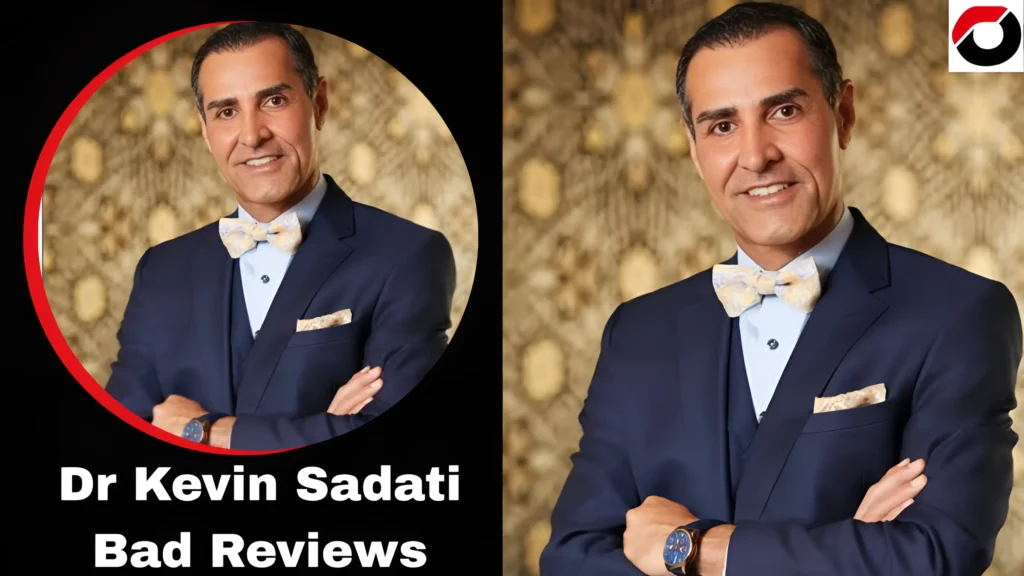
A person considering facial plastic surgery rarely begins with a single question. More often, the research starts with uncertainty: Who is this surgeon? What do patients say after treatment? Are the glowing testimonials representative, or are there experiences that deserve closer attention? And when a search such as “dr kevin sadati bad reviews” produces critical
A person considering facial plastic surgery rarely begins with a single question. More often, the research starts with uncertainty: Who is this surgeon? What do patients say after treatment? Are the glowing testimonials representative, or are there experiences that deserve closer attention? And when a search such as “dr kevin sadati bad reviews” produces critical comments alongside highly favorable ones, which parts should actually influence a decision?
Those questions are particularly important when the procedure being considered is cosmetic surgery. Unlike buying an ordinary product, choosing a surgeon involves personal anatomy, medical history, expectations, recovery, communication, and a procedure whose outcome cannot be judged simply by comparing one person’s experience with another’s. A review can describe what happened to one patient, but it cannot automatically predict what will happen to the next.
Dr. Kevin Sadati is a Newport Beach, California facial plastic surgeon whose professional profile is centered heavily on facial rejuvenation and facial plastic surgery. Public professional profiles identify him as a board-certified facial plastic surgeon and list training in otolaryngology, head and neck surgery, and facial plastic and reconstructive surgery. His practice highlights procedures including facelifts, neck lifts, rhinoplasty, eyelid surgery, brow lifts, and other facial procedures.
That professional background provides context, but it does not answer the question behind a negative-review search. A prospective patient still needs to understand what online criticism means, what it does not mean, and how to investigate concerns without allowing either praise or criticism to make the decision automatically.
The phrase “dr kevin sadati bad reviews” should therefore be approached as a starting point for careful evaluation rather than as a conclusion about the doctor or his patients.
Quick Profile
| Fact | Details |
|---|---|
| Full Name | Dr. Kevin Sadati |
| Profession | Physician and facial plastic surgeon |
| Medical Specialty | Facial plastic and reconstructive surgery, with an otolaryngology/head and neck surgery background |
| Known For | Facial rejuvenation, facelift surgery, rhinoplasty, and other facial plastic procedures |
| Practice Location | Newport Beach, California |
| Education | University of California, Berkeley; Midwestern University/Chicago College of Osteopathic Medicine |
| Medical Training | General surgery internship followed by otolaryngology/head and neck surgery and facial plastic/reconstructive training; additional cosmetic and reconstructive surgery fellowship training |
| Years in Practice | More than two decades of professional experience are publicly described |
| Professional Affiliations | Public professional profiles associate him with organizations including the American Osteopathic Association and the American Academy of Facial Plastic and Reconstructive Surgery |
| Major Procedures / Services | Facelift, neck lift, rhinoplasty, eyelid surgery, brow lift, facial contouring, injectables, and related facial procedures |
| Practice Name | The Gallery of Cosmetic Surgery / Dr. Kevin Sadati’s facial plastic surgery practice |
| Public Professional Profile | Professional listings and the American Academy of Facial Plastic and Reconstructive Surgery profile identify him as a Newport Beach facial plastic surgeon |
His professional profile is substantial enough that a prospective patient has more information to investigate than a simple star rating. The American Academy of Facial Plastic and Reconstructive Surgery lists Kevin S. Sadati, DO, FAACS, with a Newport Beach office and describes his focus on facial plastic surgery, including facelift and rhinoplasty-related procedures. His training history is also described through professional and institutional profiles, including medical education at Midwestern University and surgical training in general surgery, otolaryngology, and facial plastic surgery.
Why Someone Types “Dr Kevin Sadati Bad Reviews”
The wording of a search often reveals more about the person searching than the person being searched.
Someone typing “Dr Kevin Sadati reviews” may simply be comparing surgeons. Someone typing “Dr Kevin Sadati bad reviews” is usually looking for information that might not appear in promotional material. That does not necessarily mean the searcher has found evidence of poor care. It may simply mean the person understands that researching only positive testimonials is incomplete.
That instinct is reasonable.
Cosmetic surgery is an area in which patients can spend significant amounts of money, invest substantial time in recovery, and experience a highly personal outcome. A prospective patient may therefore want to know what happens when something does not go according to expectation.
Did the patient dislike the result?
Was the complaint about communication?
Was the concern related to recovery?
Did the patient misunderstand what the procedure could realistically accomplish?
Was the issue about scheduling, staff interaction, cost, or follow-up?
Or was the reviewer describing a medical complication?
Those are very different situations.
A review that says, “I did not like my result,” tells the reader something about one patient’s satisfaction. It does not, by itself, establish that the surgeon performed improperly.
Likewise, a review describing an unpleasant office interaction may be important to someone who values communication highly, but it does not necessarily say anything about surgical technique.
This is why the phrase Dr Kevin Sadati bad reviews should not be interpreted as though the search itself proves that serious problems exist.
The useful question is what the underlying reviews actually say and whether any apparent pattern can be meaningfully understood.
A Bad Review Is Not Automatically a Bad Outcome
The word “bad” is surprisingly imprecise when it comes to patient feedback.
A person may describe an experience as bad because the office felt rushed. Another may use the same word because recovery was harder than expected. Someone else may be unhappy because the final result did not match a mental image they had before surgery.
These experiences can be completely genuine.
But they are not equivalent.
Consider cosmetic expectations. A patient might imagine a dramatic transformation while a surgeon aims for a more conservative result. If the patient expected a visibly different face and the surgeon intentionally pursued a subtle change, the patient may walk away disappointed even if the procedure followed the agreed plan.
The opposite can also happen. A patient may appreciate a result that looks understated precisely because the goal was to avoid an obviously operated appearance.
This is why patient satisfaction cannot always be reduced to a simple before-and-after judgment.
A review reflects the patient’s perspective.
That perspective matters.
It simply needs context.
The Difference Between Dissatisfaction and a Serious Complaint
One of the most important distinctions in evaluating Dr Kevin Sadati complaints is the difference between dissatisfaction and an allegation of a professional problem.
Dissatisfaction is a statement about an experience or outcome. A patient can legitimately say that they were unhappy.
An allegation goes further. It may claim that something improper, unsafe, unethical, or professionally unacceptable occurred.
Those claims require a different standard of evaluation.
A review platform generally provides a place for people to describe experiences. It does not necessarily conduct a formal investigation into every medical allegation posted by users. That means readers should avoid turning a reviewer’s interpretation into an independently established fact.
For example, if someone says that a procedure “went wrong,” the phrase could refer to many different things. It might describe dissatisfaction with appearance, prolonged swelling, asymmetry, unexpected recovery, or something more serious. Without medical records and professional evaluation, an outside reader cannot determine precisely what happened.
That is particularly important in facial surgery, where healing can change substantially over time.
A negative review can raise a question.
It cannot automatically answer it.
What Online Reviews Can Actually Tell You
Online reviews are useful when treated as qualitative information rather than as medical evidence.
They can reveal how patients describe communication, scheduling, responsiveness, office interactions, and their personal impressions of the consultation or recovery process.
They may also reveal recurring themes.
Suppose several unrelated reviewers independently mention difficulty obtaining answers after appointments. That could be a meaningful question to raise during a consultation.
If several people mention that the office clearly explained recovery expectations, that may also be useful context.
But even patterns need careful interpretation.
Reviews are self-selected. People who are extremely happy or extremely unhappy may be more motivated to write than people who had an ordinary experience. The wording can also differ depending on when the review was written, what procedure was involved, and what the reviewer expected.
A reader should therefore look for specificity.
A detailed account explaining the procedure, timeline, communication, and concern may provide more useful information than a one-line statement saying “terrible experience.”
The same applies to praise.
“Best surgeon ever” is positive, but it tells a prospective patient very little about what actually happened.
Looking for Patterns Instead of Chasing a Single Comment
The most sensible way to investigate Dr Kevin Sadati patient reviews is to look for repeated themes rather than allowing one dramatic comment to dominate the entire decision.
This does not mean ignoring a serious allegation.
It means putting the allegation into context.
Imagine that one reviewer complains about communication. That could be an isolated experience.
Now imagine multiple detailed reviews from different periods describing similar communication problems. The repetition becomes more relevant and may justify direct questions.
The same principle applies to positive feedback.
A large collection of enthusiastic reviews may indicate that many patients report favorable experiences, but it still does not guarantee an identical outcome for a new patient.
The goal is not to count stars.
The goal is to understand the experience behind the stars.
Why Procedure Type Changes the Meaning of a Review
Not every Dr Kevin Sadati review should be treated as though it describes the same service.
A facelift patient and a rhinoplasty patient are not evaluating the same procedure.
Their anatomy is different. Their recovery is different. Their goals are different. Their expectations may be different.
The same is true when comparing surgical and non-surgical treatments.
A patient reviewing injectable treatment may be describing a very different experience from someone recovering from a major facelift.
This becomes particularly important when researching phrases such as Dr Kevin Sadati rhinoplasty reviews or Dr Kevin Sadati facelift reviews.
The procedure named in the review matters.
A prospective rhinoplasty patient should pay particular attention to rhinoplasty-specific experiences rather than assuming that every facelift review tells them something about nasal surgery.
Likewise, someone considering a facelift should focus on experiences related to facelift consultations, recovery, expectations, follow-up, and results.
Expectations Can Shape a Patient’s Experience
Cosmetic surgery occupies an unusual space because the desired result is often subjective.
A patient may have a photograph showing the type of appearance they hope to achieve. A surgeon may evaluate that expectation against facial anatomy, skin quality, proportions, previous procedures, and what can realistically be accomplished.
The final result exists somewhere between those variables.
That does not make dissatisfaction unimportant.
It makes expectation-setting extremely important.
Before surgery, a prospective patient should understand what the procedure is designed to change and what it is not designed to change.
They should also understand that healing is not instantaneous.
Swelling, bruising, temporary changes in sensation, and other aspects of recovery can influence how a patient feels during the early stages. The existence of a recovery period does not automatically mean something has gone wrong.
This is one reason an early negative review may not tell the same story as a long-term review.
Timing matters.
Communication Is Part of the Patient Experience
When people discuss Dr Kevin Sadati negative reviews, it is tempting to focus exclusively on surgical results.
That can overlook another major part of healthcare: communication.
Patients want to understand what will happen before treatment, what recovery may look like afterward, when they should contact the office, and what symptoms require attention.
A technically successful procedure can still be accompanied by a frustrating experience if the patient feels confused or ignored.
Conversely, a difficult recovery can sometimes feel more manageable when the patient believes they have clear instructions and access to appropriate follow-up.
That is why prospective patients should ask about communication before agreeing to treatment.
Who answers questions?
How are postoperative concerns handled?
What happens outside normal office hours?
What follow-up appointments are expected?
What should a patient do if they are worried about something during recovery?
These questions are not accusations.
They are ordinary parts of responsible preparation.
What a Consultation Can Reveal That Reviews Cannot
Online research can take a prospective patient only so far.
A consultation provides something reviews cannot: a direct interaction between the patient and the medical professional.
That interaction allows the patient to explain goals, ask questions, discuss previous procedures, disclose relevant medical history, and understand the proposed treatment.
It also gives the patient an opportunity to evaluate communication.
Does the surgeon listen?
Are the answers understandable?
Are limitations explained?
Does the discussion feel individualized?
Is there pressure to make a decision immediately?
Does the patient understand what procedure is being recommended and why?
These observations can be more personally relevant than a generic online rating.
A patient may discover that a surgeon who looked ideal online is not the right fit for their communication style or goals.
The reverse can also happen.
A patient may discover that online criticism does not reflect the particular concerns they have.
That is why consultation should be treated as part of the evaluation process rather than as a formality.
Questions to Ask Before Facial Plastic Surgery
Someone researching Dr Kevin Sadati cosmetic surgery reviews should eventually move beyond reviews and prepare direct questions.
Among the most useful are questions about the proposed procedure itself.
Why is this procedure being recommended?
What alternatives exist?
What limitations should the patient understand?
What does recovery normally involve?
What risks and complications are associated with the procedure?
What follow-up is included?
How are concerns handled after surgery?
What happens if the patient is dissatisfied with the result?
How long should the patient wait before judging the final outcome?
The exact questions will vary according to the procedure and the individual’s circumstances.
A good consultation is not simply an opportunity for a patient to hear why they should proceed. It is an opportunity for both sides to determine whether the treatment plan makes sense.
The Importance of Professional Credentials
Reviews should not be the only information used to evaluate a surgeon.
Professional qualifications provide a different kind of information.
Public professional listings identify Dr. Sadati as a board-certified facial plastic surgeon and connect his training to otolaryngology and facial plastic and reconstructive surgery. His professional profile with the American Academy of Facial Plastic and Reconstructive Surgery lists his Newport Beach practice and surgical interests.
His training history is also described by the University of California, Irvine’s Head and Neck Surgery educational program, which identifies his medical education at Midwestern University and subsequent surgical training in general surgery, otolaryngology/head and neck surgery, and facial plastic and reconstructive surgery.
These details do not prove that every patient will be satisfied.
They answer a different question.
They help establish the professional background of the person being considered.
That distinction is important because credentials, reviews, consultation impressions, and individual outcomes are four separate categories of information.
What About Dr Kevin Sadati’s Experience?
Experience is another area where readers should be precise.
Professional profiles describe Dr. Sadati as having more than two decades of experience in facial plastic surgery. His practice also publicly states that he has performed thousands of facelift procedures.
Those are significant professional claims, but they should be understood in their proper context.
A high procedure volume does not guarantee an individual’s result.
At the same time, a single negative review does not erase a surgeon’s professional experience.
Both pieces of information can exist simultaneously.
For a prospective patient, the more useful question is whether the surgeon’s experience is relevant to the specific operation being considered.
Someone considering rhinoplasty may want to understand the surgeon’s rhinoplasty experience.
Someone considering facelift surgery may want to understand facelift-specific training, technique, patient selection, recovery expectations, and outcomes.
Specificity is more useful than a broad claim that someone is simply “experienced.”
Dr Kevin Sadati Reviews: Why Positive Feedback Needs Context Too
It would be unfair to scrutinize negative reviews while accepting positive reviews without question.
The same standards should apply to both.
A glowing review is still one person’s experience.
A patient who describes a wonderful result may genuinely have had a very positive experience. That information is valuable. But it does not guarantee that another person’s anatomy, healing process, expectations, or result will be identical.
The same is true of testimonials displayed by a practice.
They can provide insight into how patients describe their experiences, but prospective patients should understand that testimonials are inherently selected experiences.
Balanced research therefore means looking at multiple kinds of information:
professional credentials, procedure-specific experience, consultation quality, patient feedback, recovery expectations, and independent verification where appropriate.
That approach is much stronger than simply searching for either praise or criticism.
When a Negative Review Deserves More Attention
Not every negative comment carries equal weight.
A vague complaint about a personality mismatch may be worth noting but may not matter to every prospective patient.
A detailed account describing a recurring communication problem may deserve more investigation.
A claim involving a serious medical event should be treated carefully but not repeated as an established fact unless it can be independently verified.
The reader’s job is not to investigate someone else’s medical history.
The reader’s job is to identify questions that matter to their own decision.
That is an important distinction.
If a review raises a concern about postoperative communication, ask the practice about postoperative communication.
If a review raises a concern about recovery expectations, ask how recovery is explained before surgery.
If a review describes dissatisfaction with a cosmetic result, ask what outcomes are realistically achievable for your anatomy.
In this way, criticism becomes a source of questions rather than a source of assumptions.
When One Review Should Not Decide the Choice
A single review should rarely determine a major healthcare decision.
That is true whether the review is extremely positive or extremely negative.
Online feedback can be incomplete. People remember experiences differently. Expectations differ. Reviews may describe different procedures, different staff interactions, different periods of a practice’s operation, and different stages of recovery.
Even the most detailed review represents one patient.
The right response to a concerning review is therefore neither immediate dismissal nor immediate acceptance.
Investigate.
Look for context.
Ask direct questions.
Discuss the issue during consultation.
And, when the decision is significant, consider seeking another qualified professional’s opinion.
That approach respects both the reviewer and the prospective patient.
How to Think About Dr Kevin Sadati Bad Reviews Without Jumping to Conclusions
The phrase “dr kevin sadati bad reviews” can create a psychological trap.
Once someone searches for negative information, they may start interpreting every criticism as confirmation of a suspicion.
The opposite trap is just as real.
Someone impressed by a surgeon’s credentials or positive testimonials may dismiss every negative comment automatically.
Neither approach is ideal.
A better method is to ask what the review actually establishes.
Was it an opinion?
Was it a description of dissatisfaction?
Was it a factual claim that can be independently checked?
Was it about the same procedure you are considering?
Was it written immediately after surgery or much later?
Does the reviewer explain the concern in enough detail to understand what happened?
Do multiple independent reviews describe the same issue?
These questions help separate signal from noise.
The Role of Before-and-After Images
Cosmetic surgery research often relies heavily on photographs.
Before-and-after images can be useful, but they also need context.
Lighting, camera angle, facial expression, swelling, makeup, image quality, and timing can all affect how a photograph appears.
A prospective patient should therefore be cautious about judging a surgeon exclusively from selected images.
The better question is whether the examples are relevant to the patient’s own procedure, anatomy, age range, starting point, and desired outcome.
No photograph can promise that another patient will receive the same result.
This is another reason why the consultation remains important.
Why the Patient’s Own Goals Matter
A surgeon and patient can disagree about what constitutes success even when both are acting in good faith.
One patient may want a dramatic transformation.
Another may want a subtle change.
One may prioritize a particular facial feature.
Another may care more about maintaining a recognizable appearance.
These differences can influence satisfaction.
Before choosing a surgeon, a patient should therefore be able to articulate what they actually want.
The more specific the goal, the easier it becomes to discuss whether that goal is realistic.
This can also make online reviews more useful.
Instead of asking, “Did this surgeon get good results?” the prospective patient can ask a narrower question: “Did patients seeking something similar to my goal describe experiences that are relevant to me?”
That is a much stronger way to use patient feedback.
A Broader Look at Facial Plastic Surgery Reviews
The issues surrounding Dr. Sadati’s reviews are not unique to one physician.
Any cosmetic surgeon can receive mixed feedback.
Patients are not purchasing a standardized product. They are undergoing individualized medical procedures with biological variables that cannot be completely controlled.
That makes online reviews inherently imperfect.
The value of reviews lies in identifying themes and questions.
Their weakness lies in pretending that they can predict an individual medical outcome.
Readers should remember that distinction whenever they research any surgeon, clinic, dentist, dermatologist, or other healthcare provider.
For broader discussion of healthcare decisions and patient experiences, readers can also explore related health-focused material while keeping in mind that general articles are not substitutes for individualized medical advice.
Questions Worth Asking Before Choosing a Surgeon
Does one bad review prove that Dr. Kevin Sadati provides poor care?
No. One negative review represents one person’s account and does not independently establish the overall quality of a medical practice. It may still be worth reading carefully, particularly if it raises a concern that matters to you. The appropriate response is to investigate the issue rather than treating the review as either unquestionable truth or meaningless noise.
Should I ignore negative reviews if there are many positive ones?
No. Positive reviews and negative reviews can both provide useful information. A large number of favorable experiences does not automatically invalidate criticism, while a small number of negative comments does not automatically invalidate the positive experiences. Look for recurring, specific themes and consider whether they relate to the procedure you are considering.
What makes a negative patient review more useful?
Specificity usually makes a review more informative. A detailed account may explain what procedure was performed, what the patient’s expectations were, what happened during recovery, and what specifically caused dissatisfaction. Even then, the review remains the patient’s account rather than an independently established medical finding.
Should I look specifically for Dr Kevin Sadati rhinoplasty reviews if I want rhinoplasty?
Yes. Procedure-specific information is generally more relevant than broad reviews. Rhinoplasty has different goals, considerations, and recovery experiences from facelift surgery or injectable treatments. If rhinoplasty is what you are considering, focus on questions and experiences related specifically to nasal surgery and discuss your individual goals during consultation.
What should I ask about aftercare during a consultation?
Ask who handles postoperative questions, what follow-up appointments are expected, which symptoms are considered part of normal recovery, and what patients should do if they become concerned. You can also ask how the practice communicates with patients after surgery and what support is available during recovery.
Can a negative review be caused by unrealistic expectations?
It is possible. Cosmetic outcomes are partly subjective, and patients can have expectations that differ from what a procedure can realistically achieve. That does not mean every dissatisfied patient had unrealistic expectations. It simply means expectations should be discussed carefully before surgery so that both patient and surgeon have a clear understanding of the intended result.
Should I rely on star ratings when choosing a surgeon?
Star ratings can provide a broad impression, but they are not enough for a healthcare decision. They do not explain what procedure was performed, why someone was satisfied or dissatisfied, or whether the review is relevant to your circumstances. Read detailed feedback, investigate professional credentials, and have a direct consultation before making a major decision.
What if an online review makes a serious allegation?
Do not repeat the allegation as an established fact simply because it appears online. Treat it as a claim made by the reviewer unless it can be independently established through reliable information. If the issue raises a concern that matters to you, ask appropriate questions and consider obtaining another qualified professional’s opinion.
How can a consultation help me evaluate a surgeon?
A consultation allows you to assess communication, understand the proposed procedure, discuss your goals, review potential risks and limitations, and ask about recovery and follow-up. It also gives you an opportunity to determine whether you feel comfortable with the surgeon’s approach. That personal interaction cannot be replaced by online reviews.
What is the most responsible way to research Dr Kevin Sadati?
Use several forms of information rather than relying on one source. Review professional credentials, understand the specific procedure you are considering, read patient feedback from multiple perspectives, pay attention to recurring themes, ask detailed questions during consultation, and seek another professional opinion if you remain uncertain. The goal should be informed decision-making rather than proving that every review is right or wrong.
A Better Way to Read the Search Results
The most valuable lesson from researching Dr Kevin Sadati bad reviews is that online criticism needs interpretation.
A prospective patient should not be frightened by the existence of negative feedback alone. Nor should a long list of positive reviews create automatic confidence.
The useful information sits between those extremes.
Look at the nature of the concern. Look at whether it relates to your procedure. Look at whether similar issues appear repeatedly. Look at how specific the reviewer is. Consider the timing of the review. Separate dissatisfaction from claims that require independent verification.
Most importantly, take the questions raised online into the consultation room.
If communication matters to you, ask about communication.
If recovery worries you, ask about recovery.
If you are concerned about cosmetic results, ask what outcome is realistically achievable for your anatomy.
If you are considering a particular procedure, ask about the surgeon’s experience with that procedure rather than relying on a general reputation.
That approach turns online research into something genuinely useful.
Final Thoughts
Searching for “dr kevin sadati bad reviews” is not inherently negative. In fact, looking for criticism can be part of responsible healthcare research. The problem begins when a search phrase becomes a conclusion before the underlying information has been examined.
Dr. Kevin Sadati has an established professional profile in facial plastic surgery, with public listings describing his training, board certification, Newport Beach practice, and focus on facial procedures. His own practice also describes extensive experience with facial rejuvenation and facelift procedures. Those facts provide useful professional context, but they do not guarantee any individual patient’s experience.
The same principle applies to reviews.
A positive patient review can be genuine without predicting another person’s result. A negative review can be genuine without proving professional wrongdoing. A complaint can deserve attention without being independently established. And a pattern can be worth investigating without automatically explaining why each individual patient felt the way they did.
For someone considering cosmetic surgery, that distinction matters.
The best decision is not the one based on the highest rating or the most alarming review. It is the one made after understanding the procedure, evaluating the surgeon’s professional background, asking direct questions, discussing realistic expectations, and considering multiple perspectives.
Online reviews can help start that process.
They should not be allowed to finish it.
For More Visits: Ourmagazine

















Leave a Comment
Your email address will not be published. Required fields are marked with *