
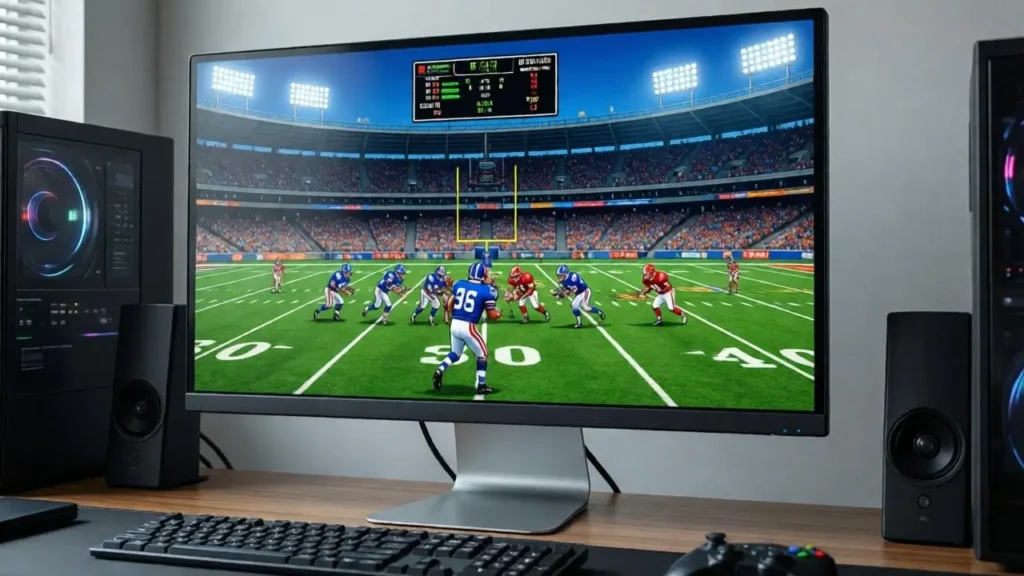
A search for retro bowl 3kh0 combines two things that are easy to confuse: a recognizable football game and a name associated with browser-based game collections. The first part, Retro Bowl, refers to the pixel-styled American football game created by New Star Games. The second part, 3kh0, can appear in connection with web-based game repositories
A search for retro bowl 3kh0 combines two things that are easy to confuse: a recognizable football game and a name associated with browser-based game collections. The first part, Retro Bowl, refers to the pixel-styled American football game created by New Star Games. The second part, 3kh0, can appear in connection with web-based game repositories and browser-playable versions, which is why the complete search phrase does not necessarily describe a separate game called “Retro Bowl 3kh0.”
That distinction is the starting point for understanding the keyword.
Retro Bowl itself is an American football game built around a deliberately compact presentation. Rather than attempting to reproduce every detail of a modern console football simulation, it combines on-field action with roster and franchise management while using a deliberately retro visual style. New Star Games describes its broader development philosophy around retro sports games that emphasize simplicity alongside depth.
The 3kh0 connection belongs to a different part of the gaming landscape. Public repositories have used 3kh0-related naming for collections containing browser games, including repositories containing Retro Bowl files or HTML5 game assets. One public repository, for example, identifies itself as a Retro Bowl game project and explicitly mentions credits to 3kh0 for code. Another repository associated with 3kh0 assets includes a Retro Bowl project among a collection of browser games.
So when someone types retro bowl 3kh0, they may be searching for the game in a browser-gaming context rather than looking for an official product named Retro Bowl 3kh0. That difference matters because it separates the actual game from the websites, repositories, mirrors, and search terminology that may surround it.
| Fact | Details |
|---|---|
| Game Title | Retro Bowl |
| Keyword Context | “retro bowl 3kh0” combines the official game name with a term associated with browser-game repositories and access contexts |
| Game Genre | American football sports game with management elements |
| Developer | New Star Games |
| Publisher | New Star Games |
| Original Release | Retro Bowl was released as a mobile game before expanding its availability across additional platforms |
| Platform | Official versions have been available on iPhone/iPad and Android, with additional platform availability documented by the developer |
| Gameplay Style | Pixel-art football action combined with roster and franchise management |
| Main Objective | Build and manage a football team while playing through games and pursuing success across seasons |
| Player Mode | Primarily single-player gameplay |
| Visual Style | Retro-inspired pixel graphics designed to evoke classic sports games |
| Notable Features | On-field play calling, roster management, press interactions, player development, contracts, and franchise progression |
First, Separate the Game From the Search Term
The easiest way to misunderstand retro bowl 3kh0 is to read the phrase as though it were the official title of a special edition.
There is no need to make that assumption.
The official game is Retro Bowl, and New Star Games identifies Retro Bowl among its own games. Its current official site also describes the studio as a developer focused heavily on retro sports RPG-style games where simplicity and depth are both important.
The 3kh0 part appears in a different ecosystem. Public GitHub repositories and browser-game projects use the 3kh0 name in connection with collections of web games. Some of those repositories include Retro Bowl projects, which helps explain why users can encounter the two terms together online.
That does not establish that 3kh0 created the original Retro Bowl, owns New Star Games, or operates every website using the term. Those are separate claims and would require separate evidence.
This distinction is particularly useful when navigating browser-game searches. A player may type a game title followed by a portal name because they remember seeing the game somewhere online. Another player may encounter a page whose title includes both terms. Someone else may be searching for a browser version because they want to play without opening the mobile application.
The phrase can therefore describe a search context, not necessarily a formal edition.
Retro Bowl at a Glance
At its core, Retro Bowl is a football game that combines arcade-style play with franchise management.
The official description emphasizes the role of the player as an armchair quarterback and highlights both roster management and decisions made during games. The Google Play listing describes the game as a retro-style American football experience with simple roster management, press duties, and on-field decision-making.
That combination gives the game an unusual position among sports titles.
A conventional football simulation can devote enormous attention to realism. Player animations, stadium presentation, commentary, physics, playbooks, and visual details can become central parts of the experience.
Retro Bowl takes a different route.
Its pixel presentation immediately reduces the visual complexity. Instead of asking the player to study every movement of a photorealistic athlete, the game concentrates attention on the decisions that determine what happens next.
That does not mean the management side is superficial. The game’s appeal comes partly from the way small decisions accumulate across a season.
You are not simply completing isolated football matches. The larger experience involves building a team, dealing with players, making roster decisions, and attempting to turn individual games into a successful franchise.
The official mobile listings characterize it as a single-player American football game, with the retro aesthetic being an important part of its identity.
Why the Pixel Look Works So Well for Football
Pixel graphics can initially look like a limitation.
Modern sports games have enormous production budgets, highly detailed stadiums, realistic lighting, motion-captured athletes, television-style presentations, and extensive animation systems. Against that background, a compact pixel football game appears almost deliberately modest.
That modesty is actually part of the appeal.
A simplified visual language makes the important information easier to read. The field becomes a strategic space rather than a cinematic environment. Players are recognizable through position and movement rather than facial detail. The action can feel immediate because the game is not asking the hardware to reproduce every physical detail of a real broadcast.
This approach also fits the game’s management philosophy.
The same principle that makes the graphics simple can make the broader experience easier to understand. The player can concentrate on the football situation rather than navigating a large collection of complicated presentation layers.
It is a reminder that a sports game does not necessarily need the visual scale of a major console production to create a meaningful sense of progression.
The appeal of the pixel football game comes from what the design leaves out as much as what it includes.
The Real Hook Is the Combination of Playing and Managing
A football game becomes more interesting when the result of one match affects what comes next.
Retro Bowl’s management layer gives the player a reason to care about roster decisions beyond the current possession.
A strong player can help during a difficult season. A developing player may become valuable over time. A poor roster decision can create problems later. Contracts, player development, and team construction make the franchise feel more like an ongoing project than a sequence of unrelated games.
The official game description specifically highlights roster management, press duties, and player personalities alongside the on-field action.
That combination creates two different kinds of decisions.
The first is immediate.
A quarterback has the ball. A receiver is moving into space. The defense is closing in. You have to decide what to do before the opportunity disappears.
The second is long-term.
Which players should remain on the roster? Where should resources go? Is a short-term improvement worth sacrificing something that could help several seasons later?
The two systems constantly influence each other.
A player who enjoys only football action can focus on the match itself. Someone who enjoys management can become invested in the broader story of a franchise.
Building a Team Is About More Than Collecting Good Players
A strong roster is not simply a collection of individually impressive names.
Team building requires thinking about how the pieces interact.
A player may have excellent abilities but become less valuable if the surrounding roster does not support the style of football you want to play. Likewise, investing heavily in one area can leave another part of the team underdeveloped.
This creates a familiar management dilemma.
Should resources be concentrated on a few high-impact players, or spread across a deeper roster?
The answer depends on how you play.
An aggressive offensive approach may make certain player investments particularly valuable. A more conservative style can place greater emphasis on consistency and minimizing mistakes.
The important part is that management decisions should support a recognizable strategy.
That is where Retro Bowl differs from a purely arcade football game.
You are not only asking, “How do I win this match?”
You are also asking, “What kind of team am I building?”
That question gives the franchise structure its personality.
What Actually Happens During a Match?
The on-field portion of Retro Bowl is intentionally more focused than a full football simulation.
The player takes control of important offensive situations, making decisions that affect how a possession develops. Passing and running are central parts of the experience, while timing and awareness determine whether a promising play becomes a successful one.
The result is a football game that can be understood quickly without becoming entirely mindless.
A successful offensive sequence involves reading the situation and choosing an appropriate response.
A receiver may appear open for only a short moment. A defensive player can change the safest option. A long pass can create a major gain but also introduces more risk than a conservative play.
Those choices create the game’s rhythm.
You are repeatedly evaluating risk against reward.
A safe decision may move the ball forward without producing a spectacular result. A more ambitious play can change the game quickly but can also produce a costly mistake.
That structure works especially well with the game’s short, accessible presentation.
Clock Management Changes the Meaning of a Good Play
Football strategy is not only about gaining yards.
Time matters.
A team with a lead late in a game has a different set of priorities from a team that needs a touchdown with very little time remaining. The same play that makes sense early in a match can be questionable when the clock becomes the main opponent.
This is one of the places where a relatively simple football game can still produce meaningful strategic decisions.
Players who understand the situation rather than simply chasing the largest possible gain can become more consistent.
A few extra yards may not matter if they leave too little time for the next possession.
Likewise, a conservative decision may be frustrating when a team urgently needs a score.
The best choice depends on the state of the game.
That situational thinking is one reason the Retro Bowl gameplay loop can remain engaging after the novelty of the pixel presentation wears off.
The Appeal of Retro-Style Sports Games
There is a particular satisfaction in games that understand their own scale.
A retro sports game does not need to compete directly with a major simulation on graphical realism. Instead, it can focus on the parts of sport that are naturally fun: decisions, momentum, competition, progression, and the satisfaction of improving over time.
Retro sports games also benefit from lower cognitive overhead.
A player can understand the basic idea quickly.
Move the ball.
Make decisions.
Score.
Manage the roster.
Improve.
Try again.
The simplicity creates room for repetition without making every match feel like a major technical undertaking.
This is part of the broader appeal of browser sports games as well. Players often encounter them because they are easy to launch and understand. A game that can deliver meaningful interaction without demanding a lengthy setup can fit naturally into short gaming sessions.
The result is a different kind of entertainment from a massive simulation.
Instead of reproducing the entire spectacle of professional sport, the game distills the sport into a collection of decisions.
Why a Football Management Game Can Become Surprisingly Personal
Long-term franchise games have a tendency to create stories.
A player might remember the quarterback who unexpectedly became the foundation of a successful run. Another might remember a season ruined by a series of difficult losses.
Those moments become meaningful because the team belongs to the player’s decision-making history.
This is where management systems are powerful.
A roster is not just a collection of statistics. Over time, it becomes a record of choices.
Who was signed?
Who was released?
Which players received investment?
Which weaknesses were ignored?
Which risks paid off?
A game with relatively simple visuals can therefore generate complicated personal narratives.
That is one reason the retro football game format works better than its appearance might suggest.
Browser Gaming Changes the Way Players Discover Games
The retro bowl 3kh0 search context also fits into a much larger browser-gaming culture.
Browser games have historically reduced the distance between discovering a game and actually playing it. Instead of downloading a large application, a player can encounter a title through a webpage or web-based game collection.
This model is especially useful for short-session games.
A player may have only a few minutes available. A browser-based game can feel attractive because it appears more immediate than a large installation.
The broader history of browser gaming is closely connected with web technologies that allowed interactive content to run directly inside browsers. Modern browser games can use technologies such as HTML5 and JavaScript rather than depending on older browser plugins.
That shift helped make browser-based games more accessible across devices.
It also created a large ecosystem of independent game portals and repositories.
Some websites host original games. Others organize publicly available web projects. Some repositories contain code or assets for browser-playable versions. The quality, ownership, licensing, and security of these sites can vary considerably.
That is where players should distinguish the convenience of browser gaming from the identity of a particular portal.
What Does 3kh0 Mean in This Context?
There is no need to assign a fictional meaning to the term.
In the context of browser gaming, 3kh0 appears as a name associated with game repositories and collections. Public material includes repositories containing a Retro Bowl project under 3kh0-related assets, while another public repository explicitly describes a Retro Bowl web game and credits 3kh0 for code.
That provides a reasonable explanation for why users might search for retro bowl 3kh0 together.
It does not establish that “Retro Bowl 3kh0” is the official name of a game released by New Star Games.
It also does not establish that every website using 3kh0 branding is connected to the original game developer.
Those distinctions are especially important because browser-game projects can be copied, forked, mirrored, modified, or republished across different repositories and websites.
A search term can therefore connect several parts of the internet without proving that all of them share the same ownership.
Retro Bowl Online and the Question of Official Access
The phrase Retro Bowl online can mean different things depending on context.
A player might simply mean playing the game through a web browser. Another person might be referring to an official version available through a supported platform. Someone else could be searching for a web-hosted copy found through a game portal.
Those are not necessarily the same thing.
The official Retro Bowl game has documented availability through recognized app platforms. The current Google Play listing identifies New Star Games as the developer and describes the game as an American football title with single-player gameplay. The App Store listing likewise identifies New Star Games as the developer.
At the same time, public web repositories show browser-oriented Retro Bowl projects.
That means the existence of a browser version does not automatically make it an official edition.
Players should therefore consider the source of a browser game rather than assuming that every page offering the same title is operated by the game’s original developer.
A Note About Unofficial Gaming Portals
Searches involving 3kh0 games can lead toward websites or repositories that collect browser games.
This can be convenient, but convenience should not be confused with official status.
An unofficial portal may simply provide access to a web project. It may not own the original game, control the underlying code, or have a formal relationship with the game’s developer.
For players, that distinction has practical consequences.
A third-party page can disappear without warning. Its version may differ from the official release. Its files could potentially be modified. Its advertising environment may also be different from that of an official platform.
There is no reason to assume that every third-party page is dangerous, but there is equally little reason to assume that every page is trustworthy simply because it displays a familiar game.
When searching for browser games, the safest approach is to consider the source, the domain, the page behavior, and whether the publisher officially recognizes the version being offered.
Strategy Starts With Consistency
The most useful Retro Bowl strategy is not necessarily the flashiest one.
Consistency tends to matter more than attempting a spectacular play every time the ball is in your hands.
A long pass can produce an enormous gain, but repeatedly choosing difficult throws can increase the chance of a mistake. A safer play may produce less excitement while keeping a possession alive.
The right balance depends on the situation.
A few useful principles are:
- Read the field before committing to a play.
- Avoid treating every possession as an opportunity for a huge gain.
- Consider the clock and score before taking unnecessary risks.
- Build your roster around the way you actually play.
- Develop players rather than constantly chasing short-term changes.
- Pay attention to weaknesses that repeatedly cost games.
- Adjust your decisions when the opponent or game situation changes.
These are not complicated rules.
Their value comes from applying them consistently.
Risk and Reward Matter More Than Raw Aggression
New players can sometimes mistake aggressive play for effective play.
Throwing deep repeatedly may feel like the fastest route to a score. But if the probability of a mistake rises, the strategy can become counterproductive.
Good decision-making is about understanding what the game situation demands.
If a team needs only a modest gain, there may be little reason to attempt the highest-risk option.
If the clock is running out and a score is necessary, the calculation changes.
That is the interesting part of football strategy: there is no single decision that is always correct.
The value of a play depends on context.
Retro Bowl compresses that concept into an accessible format, which makes it easier for players to understand why a seemingly successful decision can still be strategically poor.
Managing a Roster Over Multiple Seasons
Long-term success requires thinking beyond the next match.
Roster management can be viewed as a resource allocation problem.
A team has limited room, limited opportunities, and players with different levels of usefulness. Keeping every promising player is not always possible, and improving one area can mean sacrificing investment somewhere else.
That creates meaningful trade-offs.
A developing player may not immediately produce the same impact as an established contributor. But development can make the younger option valuable later.
Likewise, an expensive or highly valued player can help immediately but may affect the resources available for other roster decisions.
This is where the management layer turns a football game into a franchise game.
You are not merely controlling athletes.
You are shaping the conditions under which future matches will be played.
The Best Way to Learn the Game Is to Notice Patterns
Rather than memorizing a fixed list of moves, players can improve by identifying patterns.
Which situations repeatedly lead to turnovers?
Which types of plays create reliable gains?
Which roster weaknesses show up during difficult matches?
When does an aggressive approach actually help?
When does it create unnecessary problems?
Keeping track of these patterns makes improvement feel natural.
The player begins to understand not only what happened but why it happened.
That kind of learning is particularly satisfying in a compact sports game because the feedback loop is fast. A decision produces a result, the result influences the next decision, and the player gradually develops a personal style.
How Retro Bowl Compares With Large Football Simulations
The difference is not simply graphics.
A large football simulation generally attempts to reproduce a much broader portion of the sport. It may include extensive playbooks, detailed animations, realistic presentation, advanced player models, and numerous modes.
Retro Bowl deliberately operates at another scale.
Its visual simplicity makes the game approachable, while its management layer provides enough depth to create longer-term goals.
That makes the two formats appealing for different reasons.
A player who wants a highly detailed simulation may prefer a large console or PC football title.
Someone who wants a fast football experience with franchise decisions may appreciate the smaller scope of a pixel football game.
Neither approach needs to replace the other.
The appeal of Retro Bowl comes from its willingness to focus.
Where the 3kh0 Search Fits Into the Larger Picture
The retro bowl 3kh0 keyword is interesting precisely because it demonstrates how players discover games outside traditional app-store searches.
A player may know the title but remember encountering it through a browser. They may remember a game portal rather than the developer. They may search the title alongside the name of a repository they saw previously.
This behavior is common across browser gaming.
Game titles and portal names can become connected in search behavior even when they represent completely different parts of the ecosystem.
The original developer creates the game.
A repository may host a web project.
A portal may organize browser games.
A player searches for both names together.
Over time, the combination becomes its own recognizable query.
That does not transform the combination into an official product name.
What Players Should Check Before Using a Third-Party Game Page
When a browser-game page is not clearly associated with the official developer, a few basic checks are worthwhile.
First, look at the domain itself. A familiar title on an unfamiliar website deserves the same level of caution as any other third-party download or game page.
Second, pay attention to unexpected downloads. A simple browser game should not automatically require unfamiliar executable software.
Third, be careful with browser permissions. A page asking for notifications or other permissions should have a clear reason for doing so.
Fourth, avoid entering sensitive personal information simply to play a game.
Finally, compare the page with information from the official developer.
New Star Games maintains its own website and identifies Retro Bowl among its games. Its official site also provides current information about its Retro Bowl-related releases and updates.
For general gaming and entertainment reading beyond sports titles, readers can also explore online magazine coverage, where gaming and digital-culture topics can provide additional context around the wider media landscape.
Common Player Questions About Retro Bowl 3kh0
What is retro bowl 3kh0?
The phrase retro bowl 3kh0 generally combines the name of the Retro Bowl football game with 3kh0, a name that appears in browser-game repositories and related web projects. It should not automatically be interpreted as the official title of a separate game. Public repositories show Retro Bowl projects associated with 3kh0-related material, which helps explain the search connection.
Is Retro Bowl an official football game?
Yes. Retro Bowl is an officially published American football game from New Star Games. The developer’s website lists Retro Bowl among its games, while official app listings identify New Star Games as the developer.
What kind of game is Retro Bowl?
It is a retro-styled American football game that combines on-field football decisions with franchise and roster management. Its presentation uses pixel-inspired visuals, while the broader game involves building and managing a team over time.
Can Retro Bowl be played in a browser?
Browser-based Retro Bowl projects exist in public web repositories, which is one reason searches involving “Retro Bowl online” or “retro bowl 3kh0” can lead to browser-game contexts. However, a browser-hosted version should not automatically be assumed to be an official release from New Star Games.
What does 3kh0 mean when it appears beside Retro Bowl?
In this context, 3kh0 is best understood as a name associated with web-game repositories or browser-gaming projects rather than as a formal version number of Retro Bowl. Public repositories contain 3kh0-related game collections and Retro Bowl projects, which helps explain the association.
What makes Retro Bowl different from a large football simulation?
Its design is much more compact. Rather than focusing on highly detailed graphics and a massive simulation framework, it combines straightforward football action with roster and franchise decisions. The pixel presentation reinforces that focused design.
What is a useful Retro Bowl strategy for new players?
Consistency is a strong starting point. Players can improve by reading situations carefully, avoiding unnecessary risks, paying attention to the clock and score, and building a roster that supports their preferred style. The goal is not to make the most aggressive decision every time but to make the decision that best fits the current situation.
Does 3kh0 mean that a website is officially connected to New Star Games?
No automatic connection should be assumed. A 3kh0 reference can identify a repository, portal, or web project, but that alone does not establish a formal relationship with New Star Games. The official developer’s own website and recognized app listings are better places to verify the game’s identity and supported releases.
What should players know about unofficial gaming portals?
A third-party gaming portal may provide a convenient browser experience, but players should distinguish it from an official release. Check the source, domain, downloads, permissions, and requests for personal information. If the page makes claims about being an official version, those claims should be verified rather than accepted solely because the branding looks familiar.
Why This Small Football Game Has a Bigger Story
The search for retro bowl 3kh0 ultimately says as much about browser gaming as it does about football.
Retro Bowl itself has a clear identity: a pixel-styled American football game from New Star Games that combines accessible on-field decisions with roster and franchise management. Its official listings and developer information establish that identity independently of any third-party browser portal.
The 3kh0 connection belongs to a different layer of the internet. Public repositories demonstrate that the name has been associated with collections of browser games and projects involving Retro Bowl, which helps explain why players can encounter the two terms together.
That does not turn the phrase into an official game title.
Instead, it reveals how modern players often discover games: through portals, repositories, browser pages, shared links, and combinations of names remembered from previous visits.
For the player, understanding that distinction is useful. It makes it easier to separate the original Retro Bowl game from the websites and projects that may host, mirror, reference, or redistribute browser-based versions.
And beneath all of that terminology, the reason the game remains interesting is remarkably straightforward. The presentation is simple, but the decisions are not. A successful drive depends on reading the situation. A successful season depends on building a functional roster. A successful franchise depends on making dozens of small choices that accumulate over time.
That is the strength of the retro sports formula.
It does not need a giant stadium, photorealistic players, or an enormous presentation layer to make a football game feel meaningful. It only needs a ball, a field, a few decisions, and a reason to care about what happens next.
For More Visits: Ourmagazine

















Leave a Comment
Your email address will not be published. Required fields are marked with *